A history of relations between Kazakhstan and the United States since 1991


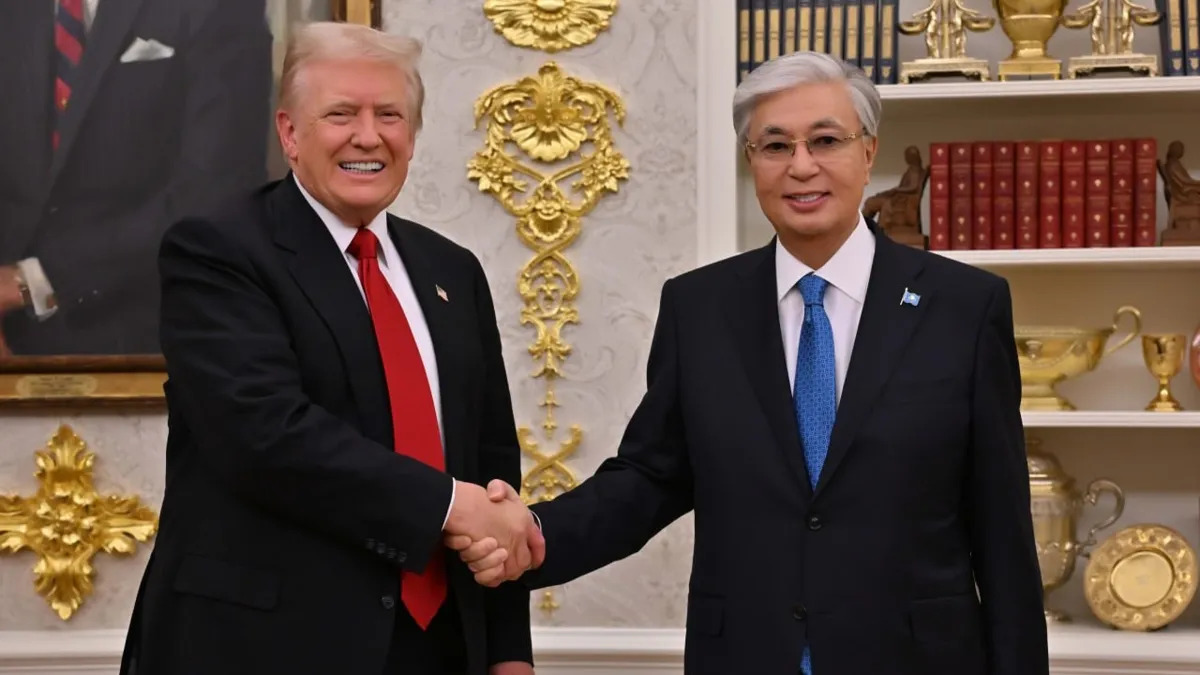
Pictured: President of the United States Donald Trump and President of Kazakhstan Kassym-Jomart Tokayev during a meeting at the White House on 7 November 2025.
Source: [1].
Relations between Kazakhstan and the United States are one of the most pivotal and, at the same time, interesting examples of the evolution of bilateral interaction between a major nuclear power and a newly established post-Soviet republic. Since gaining independence in December 1991, Kazakhstan has faced the need to formulate its own foreign policy strategy in the kind of geopolitical vacuum created by the collapse of the Soviet Union. Washington, for its part, pursued primarily strategic objectives in its relations with Astana — above all, the nuclear disarmament of the young republic and access to the energy resources of the Caspian region.
Nuclear disarmament as the starting point of bilateral relations
Independent Kazakhstan inherited the world’s fourth-largest nuclear arsenal from the Soviet Union — more than a thousand strategic nuclear warheads, located mainly at bases at the Semipalatinsk nuclear test site and other strategic facilities, not to mention a large number of tactical nuclear weapons. The question of the nuclear legacy became the starting point for relations between the two countries [2].
The United States, for its part, feared the possibility that some of the former USSR’s nuclear, chemical and biological weapons might be transferred to hostile groups and terrorist organisations. This led to the ‘Soviet Nuclear Threat Reduction Act of 1991’ and the ‘Cooperative Threat Reduction’ (CTR) programme established under this legislative initiative, known as the ‘Nunn–Lugar programme’ (named after the senators who developed the initiative, Sam Nunn and Richard Lugar). These legislative initiatives created mechanisms for eliminating chemical and biological weapons on the territory of all the countries that emerged from the Soviet Union. Particular attention was paid to dismantling nuclear facilities in what are now Belarus, Ukraine and Kazakhstan, and transferring their nuclear arsenals to the Russian Federation; at the same time, these acts allowed financial assistance to be provided to the countries of the USSR to achieve these objectives [3, 4].
As part of these efforts, the United States secured the closure of the Semipalatinsk nuclear test site on 29 August 1991 [5, ст. 2].
In December 1991, Kazakhstan, together with Belarus, Ukraine, the Russian Federation and the United States, signed the Alma-Ata Declaration, in which the parties undertook to comply with the nuclear non-proliferation regime and to transfer control of nuclear weapons in the future. Under the declaration, these states were also to ensure, by 1 July 1992, that tactical nuclear weapons were transferred to central bases near the manufacturing plants for dismantlement under joint control [6].
In May 1992, the Lisbon Protocol to the Treaty on the Reduction and Limitation of Strategic Offensive Arms (START I), signed on 31 July 1991, was signed. In it, the newly established states formally undertook to accede to and comply with the 1968 Treaty on the Non-Proliferation of Nuclear Weapons (NPT). Under the Protocol, Belarus, Kazakhstan and Ukraine were officially recognised as non-nuclear-weapon states and were required to take all necessary measures to ensure this status. This meant that the countries listed above had to transfer their nuclear weapons to the Russian Federation or dismantle them [7].
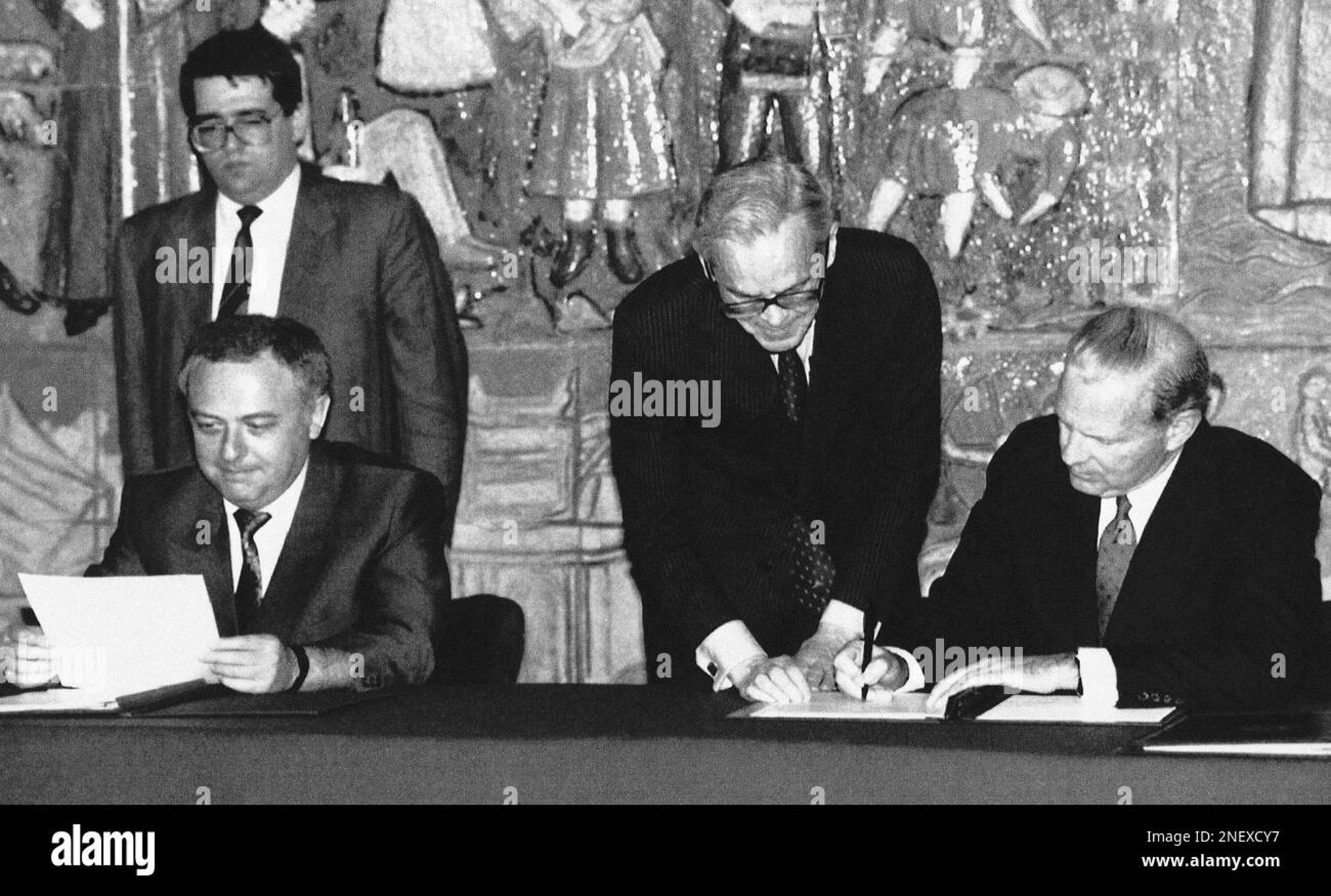
Pictured: Secretary of State James Baker (right) and Russian Foreign Minister Andrei Kozyrev sign the Lisbon Protocol on Saturday, 23 May 1992.
Source: [8]
On 2 July 1992, Kazakhstan became the first post-Soviet country to formally ratify START I and its associated Lisbon Protocol, effectively demonstrating the determination of then-President Nursultan Nazarbayev to relinquish nuclear weapons as quickly as possible. The active phase of transferring tactical nuclear weapons to Russia began on this date. This can be compared with the other signatory countries, which were in no particular hurry to ratify the treaty: as we shall see, the ratification process for all the countries would drag on until 1994. The speed of the transfer of the aforementioned tactical nuclear weapons was also striking: by January 1993, all of Kazakhstan’s tactical nuclear weapons had been transferred to Russia [9].
By the end of 1993, Kazakhstan and the United States had signed an agreement on the ‘Destruction of Intercontinental Ballistic Missile Silo Launchers, Emergency Response and Nuclear Weapons Proliferation Prevention’, in return for which the United States agreed to provide technical and financial assistance for safe dismantlement and monitoring. The agreement formally established implementation procedures, information sharing and inspection by both parties [10]. In practice, this marked the beginning of the active transfer of all strategic nuclear weapons and the destruction of the country’s nuclear facilities.
Overall, in order to achieve the shared objective under the American ‘Nunn–Lugar programme’, the United States allocated $172 million to dismantling Kazakhstan’s nuclear facilities and disposing of chemical and biological weapons [4]. The best example of the programme in practice was the assistance provided to Kazakhstan to remove 1,322 pounds of highly enriched uranium from the Ulba Metallurgical Plant in Ust-Kamenogorsk. The United States paid Kazakhstan $25 million for the transport of the highly enriched uranium [11].
The culmination of the diplomatic process to eliminate all the country’s nuclear materials was Project Sapphire in 1994, during which American specialists, under conditions of strict secrecy, removed around 600 kilograms of enriched uranium — enough to produce several dozen nuclear bombs — from Ust-Kamenogorsk to the United States [12]. This became one of the greatest successes of American nuclear non-proliferation diplomacy in the first decade after the end of the Cold War.
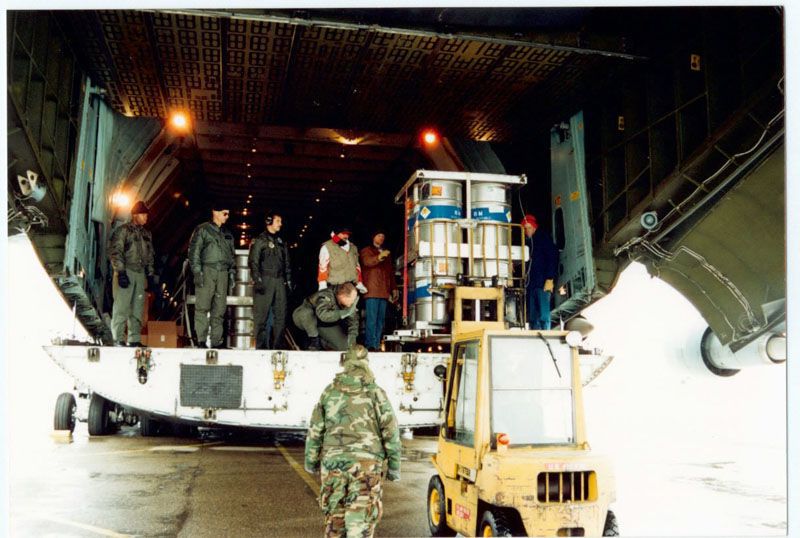
Highly enriched uranium is loaded onto a US Air Force C-5 aircraft for transport to the United States.
Source: [13].
On 24 April 1995, the last strategic nuclear weapons based on the territory of Kazakhstan were transferred to Russia [4]. On the same day, Kazakhstan began dismantling its intercontinental ballistic missile silos in accordance with START I [14, ст. 30–31]. By 2002, around six silos remained to be dismantled, and American funding for their destruction continued [14, ст. 17]. But despite all efforts, more than 30 years after the collapse of the Soviet Union, undecommissioned shafts remain at the Baikonur Cosmodrome. They are in a state of disrepair, and their future remains uncertain. [15].
Looking back at the entire process of eliminating nuclear weapons in Kazakhstan, this story can also be compared with Ukraine’s experience. Throughout the negotiations, Ukraine sought to bargain over the future of the nuclear warheads on its territory, culminating in the signing of the infamous Budapest Memorandum in December 1994. Unlike Ukraine or Russia, Kazakhstan did not engage in lengthy bargaining over the transfer of the weapons: Nazarbayev consistently persuaded his own elite of the need to take this step, recognising that nuclear status could become a burden rather than a shield for the young state amid international isolation.
It is worth noting that renouncing its nuclear arsenal made relations between Astana and Washington truly unique within the CIS in the early 1990s. The two countries conducted highly constructive negotiations throughout this period, with the result that Kazakhstan became the first country party to the START I Treaty to quickly transfer all its nuclear weapons and uranium to Russia and the United States. From the outset, Astana clearly signalled its readiness to disarm in return for financial compensation and international recognition, while Washington provided practical means of support — funding for dismantlement, technical assistance and payment for the uranium removed — thereby eliminating the nuclear threat and gaining a strategic foothold in Central Asia.
Energy cooperation: oil as the driving force behind the partnership
Oil production in Kazakhstan began as early as 1911, but output remained at roughly the same level for a long time — until the late 1970s, when the Soviet authorities began extracting oil in the region on a large scale. Kazakhstan first exceeded production of one million barrels a day in 2003, after years of cooperation with American companies [16]. Energy cooperation between the United States and Kazakhstan is one of the key examples of the transformation of the post-Soviet economy and the integration of newly independent states into the global economy. Following the collapse of the USSR, Kazakhstan, with its substantial reserves of oil, gas and uranium, faced the need to attract foreign investment and technology rapidly in order to develop its energy sector. In this context, the United States became one of its principal strategic partners, providing not only financial support but also access to advanced technology and international markets.
Kazakhstan’s interests here are, in principle, clear: the country’s total oil reserves amount to around 30 billion barrels (12th in the world), while oil production remained relatively low until the 1980s, fluctuating at around half a million barrels a day. This continued until the Tengiz field was discovered in 1979, attracting the attention of the Soviet authorities, who had until then focused mainly on the oil fields in the Urals [17, 18]. But the USSR no longer had the resources to build new infrastructure in Kazakhstan: the difficulty of developing the new Kazakh fields and the economic crisis of the second half of the 1980s made it impossible to develop them to full capacity [19]. After declaring independence, Almaty (Kazakhstan’s capital until 1997; thereafter, Astana) sought to bring in international experts to develop its ‘black gold’.
In my view, the position of the United States is much more interesting here: what exactly prompted it to do business with Kazakhstan? US interest in energy cooperation with Kazakhstan was driven by a combination of long-term strategic and economic factors. After the 1973 oil crisis, Washington recognised the vulnerability of its energy security and began diversifying its sources of supply, a policy that was later enshrined in the 1980 Carter Doctrine [20]. The collapse of the USSR opened up access to the Caspian region, where Kazakhstan possessed substantial resources that were technologically challenging to develop, creating favourable conditions for American companies to enter the market. Ultimately, this cooperation was a logical extension of the US strategy to safeguard energy security and expand its geopolitical presence in Eurasia.
The story of American businesses entering Kazakhstan’s oil fields began in the late 1980s and early 1990s, while the Soviet Union still existed. It began with an interest in developing the Tengiz oil field, discovered in 1979. During the 1980s, the Soviet leadership invested around $1 billion in developing the field, but, having found it technically impossible to drill there, realised that foreign assistance was indispensable. In 1990, Soviet President Mikhail Gorbachev granted Chevron special exploration rights, and the deal was quickly dubbed the ‘Deal of the Century’. However, it soon became highly politicised. During the nuclear negotiations that would later culminate in the signing of START I, Gorbachev entertained the possibility of terminating the contracts with Chevron in order to put additional pressure on the Americans, although the then President of the United States, George H. W. Bush, considered the deal necessary and mutually beneficial. However, the signing of the final agreement to begin oil production at the field by the American company was repeatedly delayed by the Soviet Union’s internal problems, until the country ceased to exist altogether, putting the ‘Deal of the Century’ at risk [21].
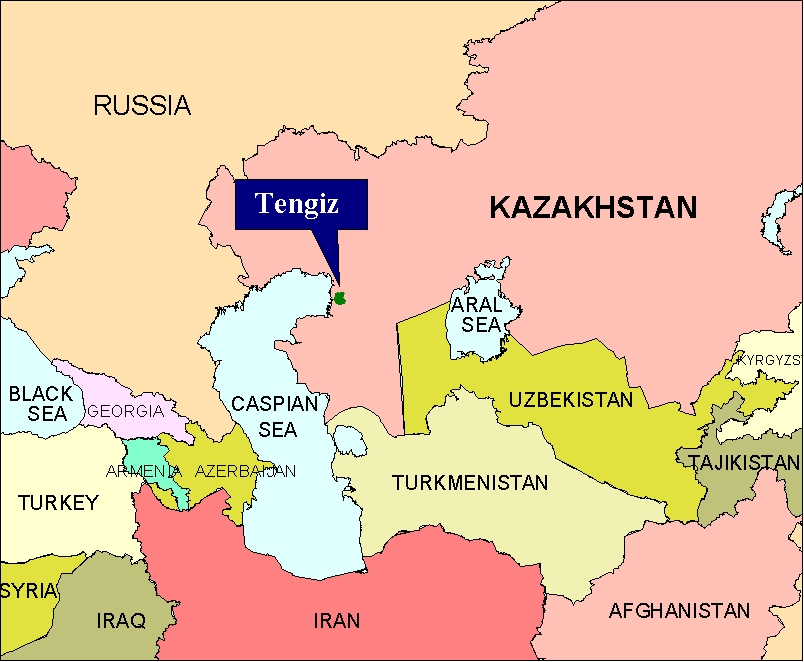
Location of the Tengiz oil field in Kazakhstan.
Source: [22].
After the collapse of the Soviet Union, Kazakhstan’s then President, Nursultan Nazarbayev, sought opportunities to establish business contacts with Washington, and the major unfinished oil project proved useful to the country’s leader. In April 1993, an agreement was signed to establish the joint oil venture TengizChevroil, in which 50% of the company’s shares were controlled by Chevroil. It became the first foreign company to establish a joint venture with Kazakhstan [21]. At present, according to information from the oil giant itself, between 2010 and 2019 the company generated around 6% of Kazakhstan’s annual GDP [23].
After the signing of the ‘Deal of the Century’, closer energy and oil ties began to develop between Washington and Kazakhstan. In the same year, 1993, an international consortium was established to conduct geological exploration on the Caspian Sea shelf. The participation of global giants such as British Petroleum, Total and Shell underscored the importance of the Caspian fields.
In 1995, President Nursultan Nazarbayev signed the Decree ‘On Oil’, which was aimed at attracting foreign investment in the oil and gas sector. Soon afterwards, the national oil and gas company Kazakhoil and the oil transport company KazTransOil were established [16]. In 1997, the Production Sharing Agreement for the North Caspian Sea (NCSPSA) was signed between the Republic of Kazakhstan and an international consortium of oil companies. This North Caspian project was Kazakhstan’s first major offshore oil and gas project [24].
In 2000, the giant Kashagan oil field was discovered under the NCSPSA. Located in the northern part of Kazakhstan’s sector of the Caspian Sea, it is considered one of the largest oil fields discovered anywhere in the world in the past 45 years [25]. This shallow-water field, which extends 75 km in length and 45 km in width, covers an area of 2,678 km² in the Caspian Sea. Located 4.2 km beneath the seabed, the high-pressure Kashagan reservoir is estimated to contain more than 35 billion barrels of oil, of which up to 13 billion barrels are recoverable [26].
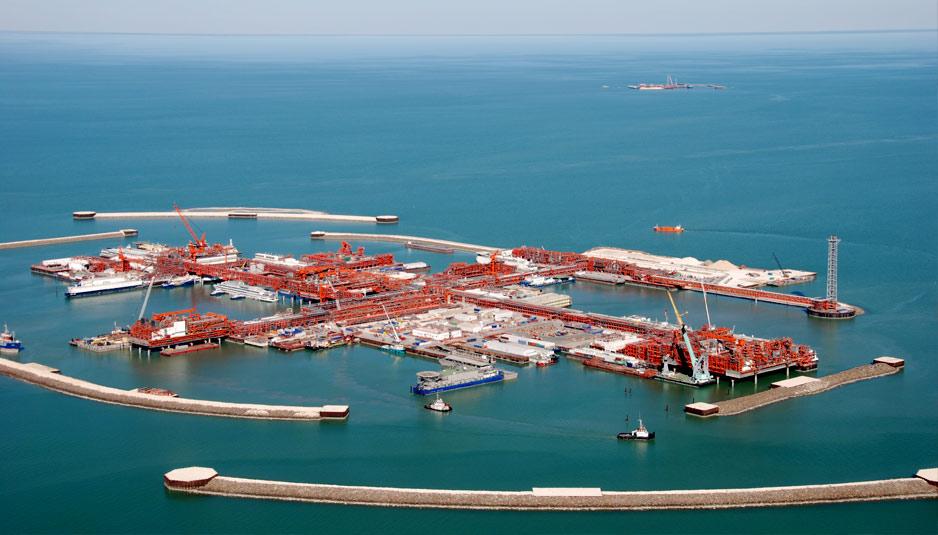
Kashagan oil field
Source: [27].
As part of this project, the Kalamkas-Sea field was discovered in 2002, followed in 2003 by the Aktoty, Kairan and South-West Kashagan fields. Exploration and appraisal results put the geological reserves of the Kalamkas-Sea field at 284 million tonnes of oil, those of the Aktoty field at 156 million tonnes of condensate, those of the Kairan field at 112 million tonnes of oil, and those of the South-West Kashagan field at 20 million tonnes of condensate [25].
The operating company responsible for coordinating oil production under the NCSPSA is the North Caspian Operating Company (NCOC). It is a joint venture founded by major oil companies. According to information provided by the company itself, its main shareholders are the founding companies: KazMunayGas (16.88%), Eni (16.81%), Shell (16.81%), ExxonMobil (16.81%), Total (16.81%), CNPC (8.33%) and Inpex (7.56%) [28].
Through the existence of major joint ventures such as the North Caspian Operating Company, Kazakhstan has been able to enhance its reputation as a reliable partner, not only for international oil companies but also for the US Government.
At the same time, it is worth noting another key element of the country’s oil infrastructure: the Caspian Pipeline Consortium (CPC). This key oil export route from Kazakhstan cost $2.6 billion and runs for more than 1,500 kilometres from the Tengiz oil field in western Kazakhstan to the Russian port of Novorossiysk on the Black Sea. Construction of the pipeline began in 1999, and it became a key east–west route for transporting crude oil from the Caspian region to global markets. US corporations such as ChevronTexaco and ExxonMobil financed almost half of the project’s total cost of $2.6 billion [29]. Commissioned in 2001, the pipeline is the backbone of Kazakhstan’s economic infrastructure, enabling the country to export approximately 80% of its oil production. With a capacity of more than 1.4 million barrels per day, the CPC makes a significant contribution to global oil supplies, accounting for around 1% of daily global consumption. US companies hold 22.5% of the consortium’s shares, with Chevron and ExxonMobil holding 15% and 7.5%, respectively. If the shares held by companies from other Western countries are also included, Western companies control 32% of the consortium’s shares [30]. This really shows us how important projects of this kind in Kazakhstan are to major Western oil companies, even when they are not directly involved in them.
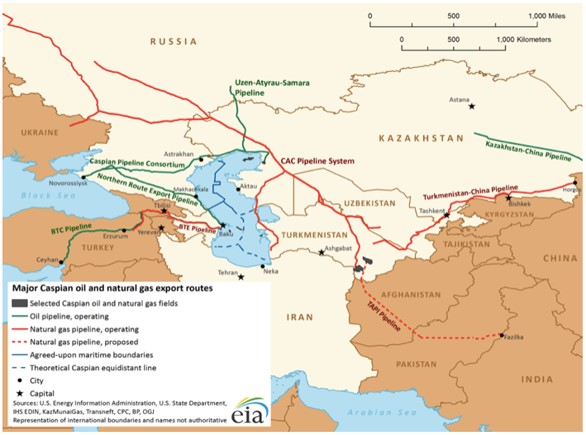
Main oil and natural gas export routes in the Caspian region
Source: [31].
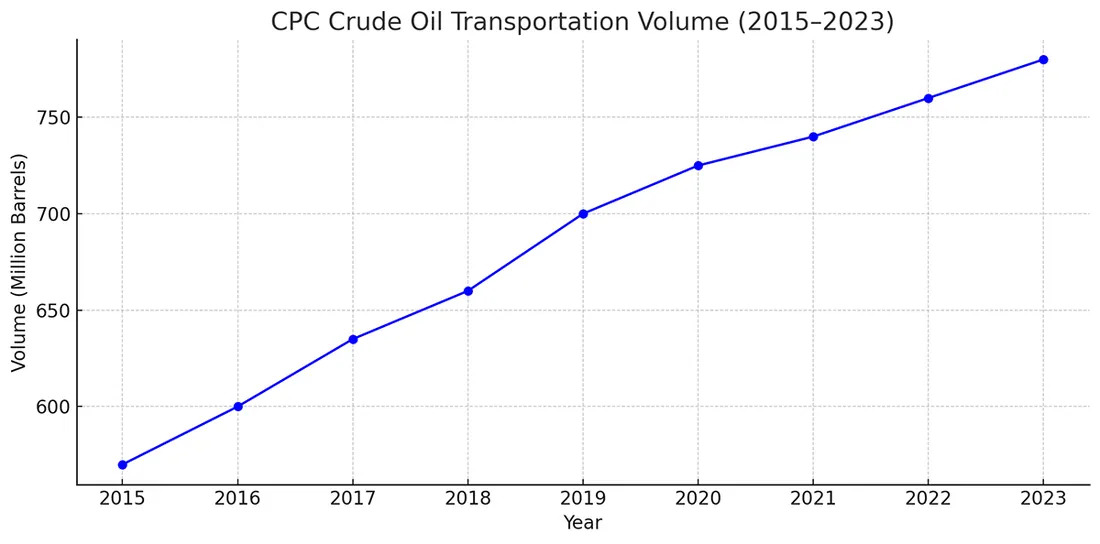
Volume of Kazakhstan’s crude oil transported via the Caspian Pipeline Consortium (CPC), 2015–2023 (million barrels per year).
Source: [30].
Given Kazakhstan’s extraordinary dependence on exporting petroleum products through Russia, Washington has consistently supported the country’s efforts to diversify its routes for transporting raw materials. One such project was the 1,768-kilometre Baku–Tbilisi–Ceyhan oil pipeline, which runs from Azerbaijan’s oil fields on the Caspian Sea coast to the Mediterranean Sea in Turkey. It connects Baku, the capital of Azerbaijan, with Ceyhan, a port on Turkey’s south-eastern Mediterranean coast, via Tbilisi, the capital of Georgia. It was officially inaugurated on 28 May 2006 [32]. This route in itself offers little benefit to Kazakhstan, but it has become an important part of a project whose potential has grown in recent years in response to foreign policy challenges, above all Russia’s war against Ukraine. The project is known as the Trans-Caspian International Transport Route.
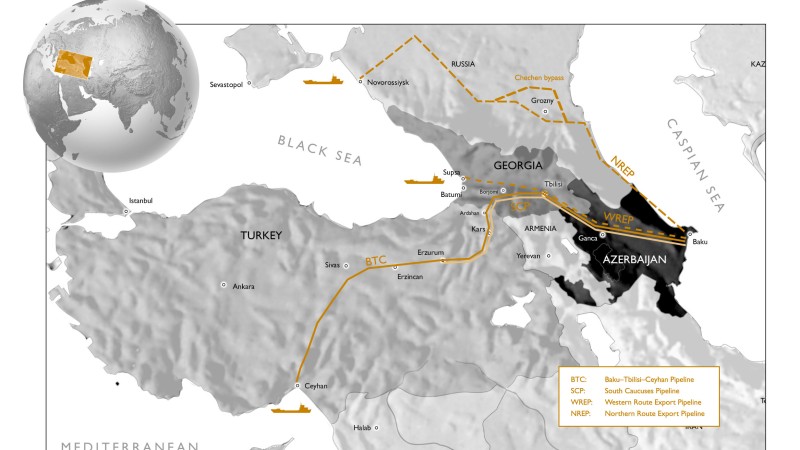
Baku–Tbilisi–Ceyhan oil pipeline
Source: [33].
The Trans-Caspian International Transport Route is a corridor that crosses China and Kazakhstan, traverses the Caspian Sea, and continues through Azerbaijan and Georgia and then through European countries. Geographically, it is the shortest route between China and Europe. Despite this advantage, until 2022 it remained economically uncompetitive and secondary, accounting for only 2–3% of land-based container transport between Asia and Europe. Since 2022, the need to maintain a reliable route across Eurasia that does not pass through Russia, a source of regional instability, has made this route more relevant. Since then, almost all regional and global players, including the US, have become interested in its development. Export and import flows along this route are continually increasing, but it will take some time for the region’s infrastructure to be further developed and, in turn, bring down the cost of using the route [34]. For Kazakhstan, as noted above, developing this route is extremely important, as it would substantially reduce the country’s dependence on the Caspian Pipeline Consortium, which, as a reminder, accounts for up to 80% of the country’s crude oil exports.
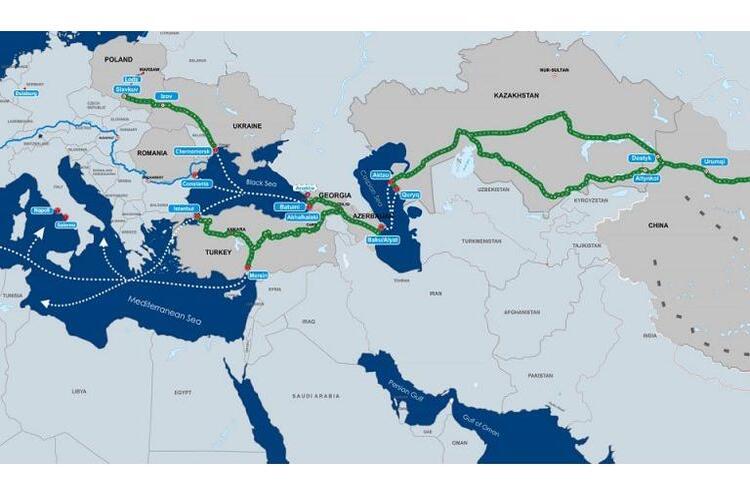
Trans-Caspian International Transport Route
Source: [35].
Thus, energy cooperation between the United States and Kazakhstan became a decisive factor in the transformation of Kazakhstan’s oil and gas sector after the dissolution of the USSR, giving the country access to foreign investment, modern technology and global markets. Lacking the necessary resources and technical capabilities in the final years of the Soviet Union, Kazakhstan was able to develop its strategic fields effectively, notably Tengiz and Kashagan, by bringing in US companies. This took the country’s oil production to a new level. For the United States, meanwhile, this cooperation formed part of a broader strategy to diversify energy flows and strengthen its geopolitical presence in the Caspian region, dating back to the 1973 oil crisis. The establishment of joint ventures, the development of export infrastructure and participation in key projects such as the Caspian Pipeline Consortium cemented the interdependence of the two sides and integrated Kazakhstan into the global energy system. At the same time, the significant reliance of exports on routes through Russia prompted Kazakhstan to seek to diversify its transport routes, a priority that became particularly pressing after 2022. In this context, developing alternative corridors, including the Trans-Caspian route, is of strategic importance both to Kazakhstan’s economic security and to US interests.
Development of diplomatic and economic relations: from the Charter to C5+1
After the dissolution of the Soviet Union, the United States became the first country to recognise Kazakhstan’s independence, on 25 December 1991. In January 1992, the US opened its embassy in Almaty, which was moved to Astana in 2006. [36]Relations between the two countries subsequently developed in the context of nuclear disarmament, until President Clinton invited Nazarbayev to Washington in February 1994. During the visit, the two sides signed the ‘Charter on Democratic Partnership’, marking the beginning of strategic relations between the United States and Kazakhstan. The document also affirmed the sides’ shared fundamental values, including democracy, the rule of law and respect for human rights. This marked a shift from routine diplomatic contacts to deeper, more institutionalised cooperation in the political, economic and security spheres. The United States also substantially increased its annual financial support to Kazakhstan, from approximately $91 million to over $300 million. Particular emphasis was also placed on developing trade and investment, and on the participation of US companies in Kazakhstan’s energy sector. [37]The document formalised mutual commitments in security, economic affairs and democratisation, and declared Kazakhstan an ‘important US partner’.
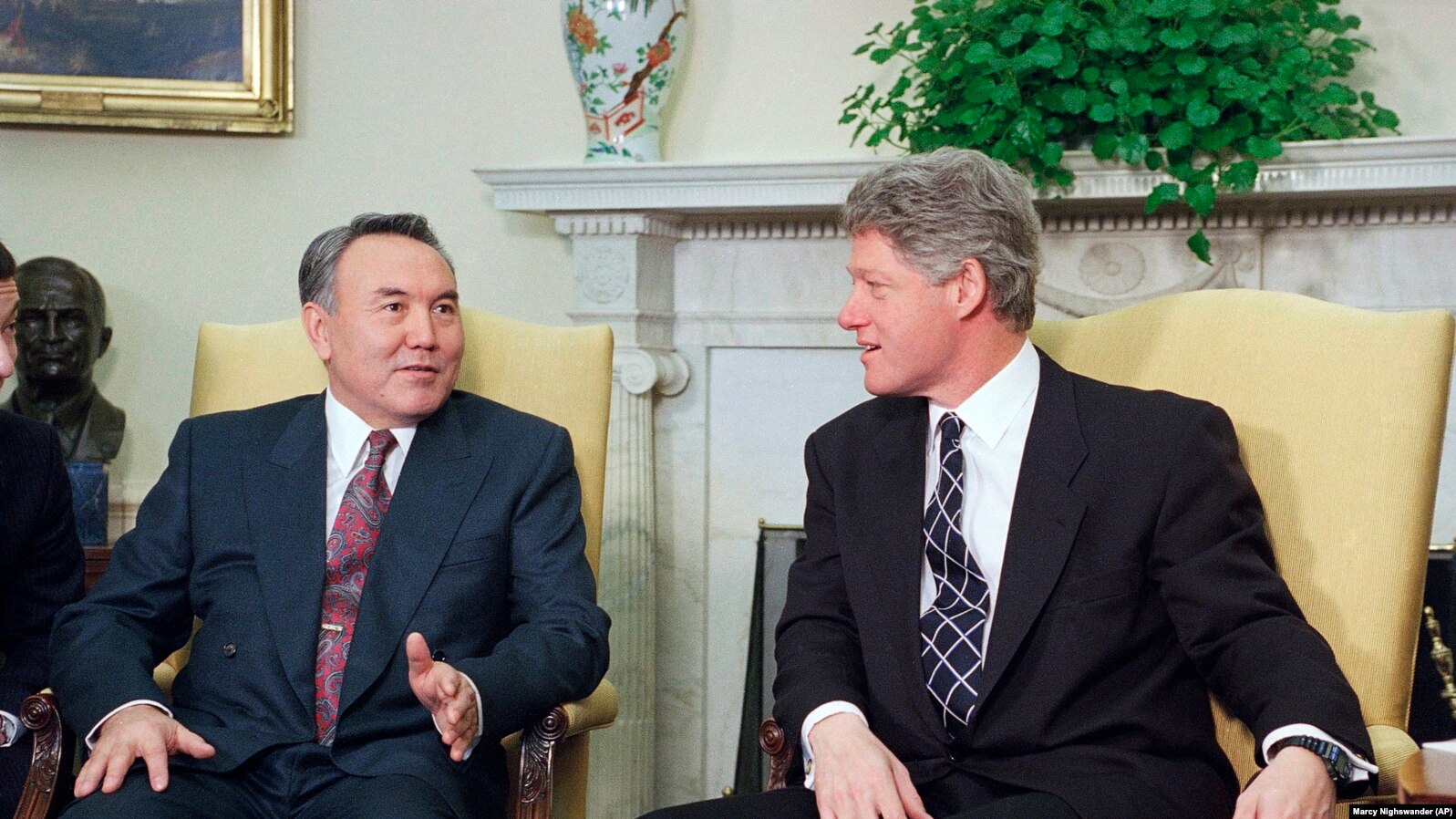
Kazakh President Nursultan Nazarbayev meets US President Bill Clinton in 1994.
Source: [38].
After the terrorist attacks of 11 September 2001 on US soil, Kazakhstan unequivocally supported the Washington-led anti-terrorist coalition and began gradually deepening security cooperation. This became one of the turning points in bilateral relations: cooperation moved from declarations to practical military and political engagement.
One of the first concrete steps was granting Washington overflight rights for aircraft as part of Operation Enduring Freedom. This later became part of the Northern Distribution Network (NDN), which served as a logistics route for NATO forces throughout the US campaign in Afghanistan and was vital to US logistics. [39].
At the same time, cooperation began to take institutional form, including the establishment of a liaison group at US Central Command (CENTCOM), signalling a long-term commitment to security cooperation. [40].
An important milestone was the signing in 2003 of a five-year military cooperation agreement between Kazakhstan and the United States. It provided for the establishment of a counter-terrorism training centre, including in Aktau, as well as the development of joint military training. This went beyond ad hoc support and signalled the formation of a structured military partnership. Kazakhstan actively used cooperation with the United States and NATO to modernise its armed forces. This involved transitioning to a modern army structure, creating mobile rapid-response units, modernising the border service and introducing Western training standards. Kazakhstan’s participation in US-led international missions was a practical expression of this cooperation. In particular, it sent a peacekeeping battalion to Iraq, marking the first deployment of Kazakh troops outside the region and a direct contribution to the implementation of US security policy. [40].
By 2010, the increased presence of US troops in Afghanistan coincided with a sharp rise in military assistance to Central Asia, a significant proportion of which went to Kazakhstan. Total assistance amounted to $649 million in 2010, but by 2014, following a substantial reduction in the number of US troops and the diminished role of the NDN, security assistance had fallen to $148 million. [39].
Overall, Kazakhstan’s participation in the global ‘war on terror’ became a key catalyst for a qualitative deepening of its relations with the United States: from initial diplomatic recognition and basic contacts in the 1990s to the establishment of a genuine military-strategic partnership in the 2000s.
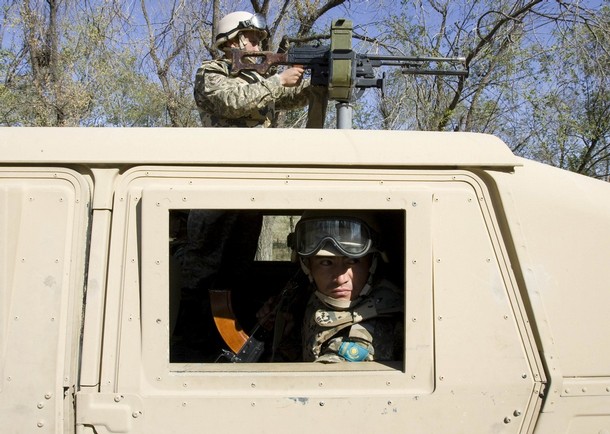
Kazakh military personnel during military exercises at the Ili training ground near Almaty, 23 September 2008.
Source: [41]
In the 2000s, the trade and financial dimension of relations between the United States and Kazakhstan was characterised by significant asymmetry: foreign direct investment played the key role, while bilateral trade volumes remained relatively limited. Economic engagement was focused primarily on strategic sectors, giving cooperation an investment-oriented character. This model did not involve the development of intensive trade flows; instead, it provided access to capital, technology and management expertise. [42, ст. 92–93].
Kazakhstan demonstrated steady economic growth throughout the 1990s and early 2000s. However, this was largely based on the development of the energy sector, resulting in a narrow specialisation in economic ties between the two countries. The American economic presence in Kazakhstan was concentrated primarily in the oil and gas sector, where major companies participated in the development of fields and the extraction of resources. Other sectors of the economy were much less integrated into bilateral cooperation, limiting opportunities for its expansion and diversification. The structure of trade between the countries reflected this imbalance: Kazakhstan exported mainly raw materials, including metals and energy commodities, while imports from the United States consisted of high-tech products, machinery, equipment and related services. Put more simply, trade between the two countries amounted to an exchange of Almaty’s energy resources for Washington’s high-value-added products. This model reproduced the classic division between a supplier of raw materials and a supplier of technology, limiting the development of deep economic interdependence and constraining more complex forms of economic cooperation. [42, ст. 93–94].
Additional factors constraining the development of trade included geographical distance, high logistics costs and complex transport routes. Trade was also hampered by administrative barriers, including customs procedures and regulatory restrictions, which increased transaction costs and reduced the competitiveness of bilateral trade compared with other trade routes. The institutional features of Kazakhstan’s domestic environment also had a significant impact on economic interaction. Despite the implementation of market reforms, problems persisted, including inconsistent regulatory policy, limited transparency in business practices and risks to foreign investors. Contract terms could be revised ‘arbitrarily’, and administrative levers of influence could be used, increasing uncertainty for investors and requiring them to take additional political and economic risks into account. [42, ст. 95–96].
The country’s financial system was characterised by a number of structural constraints, including underdeveloped financial markets and limited access to capital for a broad range of economic actors. The 2008 global financial crisis posed an additional challenge, significantly affecting Kazakhstan’s banking sector and exposing its vulnerability to external shocks and dependence on external financing. The crisis led to a contraction in lending, a deterioration in financial stability and an increased need to reform the financial system. [42, ст. 95].
An important area of cooperation was support for economic reforms aimed at modernising the financial system, developing the banking sector and improving the regulatory environment. Considerable attention was paid to harmonising legislation with international standards, including in the areas of trade, investment and intellectual property rights protection. This was seen as a necessary condition for integration into the global economy and for building confidence among international businesses. At the same time, economic interaction remained limited by the underdevelopment of small and medium-sized businesses and insufficient economic diversification. The main ties were forged among large corporations, concentrating cooperation in a narrow range of sectors and making relations more sensitive to shifts in global market conditions, particularly in energy markets. [42, ст. 95–99].
Overall, the trade and financial dimension of bilateral relations during this period was gradual in development, structurally constrained and investment-oriented. It did not become the dominant area of cooperation, but served as an economic foundation for a broader strategic partnership, remaining closely linked to the domestic transformation of Kazakhstan’s economy and its integration into the global economic system.
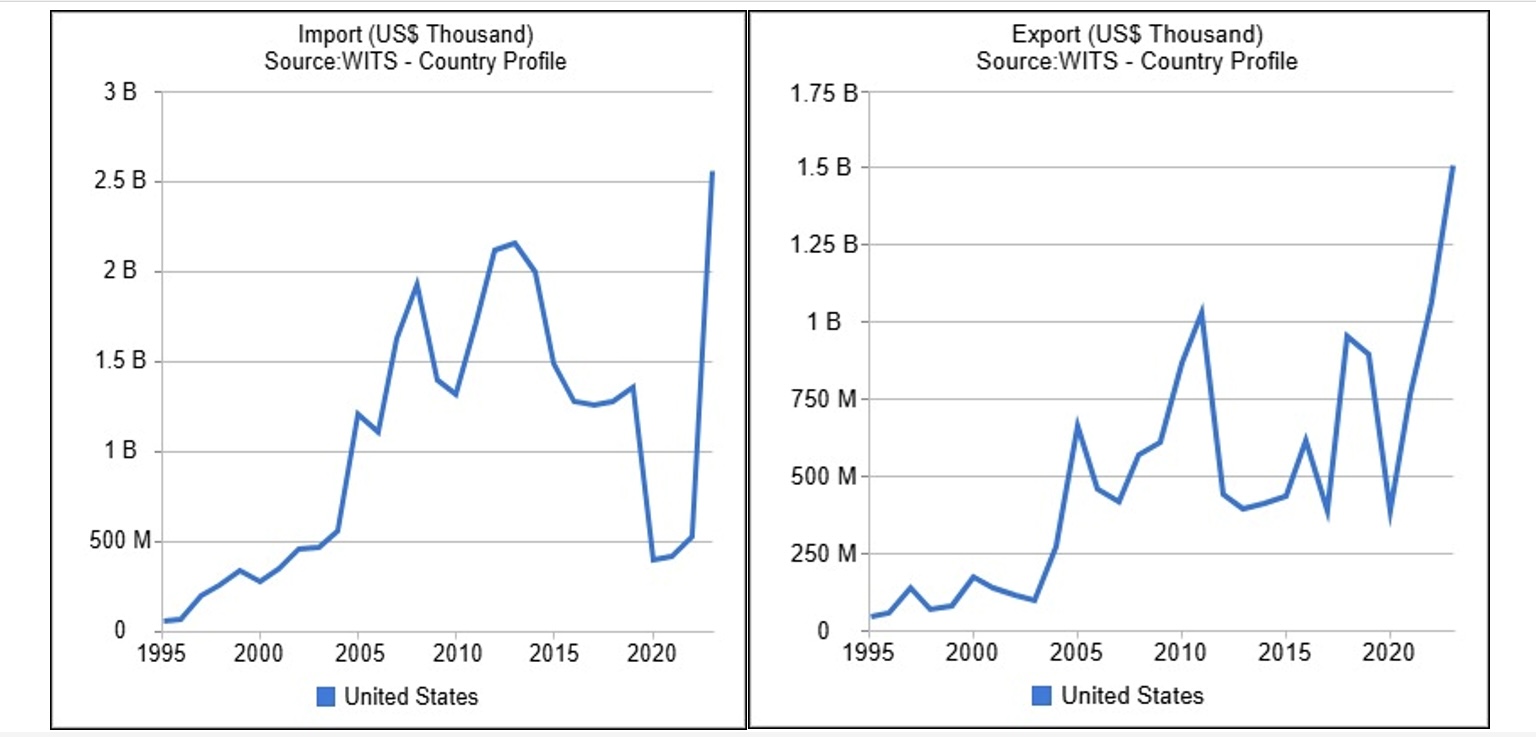
Graphs of exports and imports between Kazakhstan and the United States of America, based on World Bank data for 1995–2023 (in thousands of US dollars).
Source: [43].
From 2015 onwards, a new format, ‘C5+1’, assumed increasing importance for cooperation at the state level. It is an annual consultative mechanism involving the US Secretary of State and the foreign ministers of the five Central Asian states: Kazakhstan, Kyrgyzstan, Tajikistan, Turkmenistan and Uzbekistan. In recent years, the platform has developed actively through meetings of heads of state. Since its establishment and the first meeting of foreign ministers in Samarkand in 2015, interaction within this mechanism has helped strengthen the partnership between the United States and Central Asia. The platform’s working groups support three main areas of cooperation: the economy, energy and security. Dialogue on critical minerals is aimed at expanding cooperation between the United States and Central Asia in geological exploration, investment opportunities in the mining and processing industries, and supply chains. In 2022, the format established a Secretariat to further institutionalise the platform and strengthen interaction between the parties. [44].
The establishment of this format for dialogue between the countries helped significantly improve relations between the parties. Thus, in early 2018, at a meeting between President Nursultan Nazarbayev and Donald Trump at the White House, an agreement was concluded to elevate the partnership between the countries to the level of an ‘Enhanced Strategic Partnership’. Under the agreement, the parties undertook to increase their cooperation in the areas of the economy, defence, security and regional stability. An interesting fact: the meeting between Nazarbayev and Trump took place during the first official visit by a leader of Kazakhstan to Washington since 2006, illustrating how significant the event was for relations between the two states. [45].
Overall, this platform allows the United States to project its influence in Central Asian countries while circumventing the major powers with significant influence in the region, primarily Russia and China.
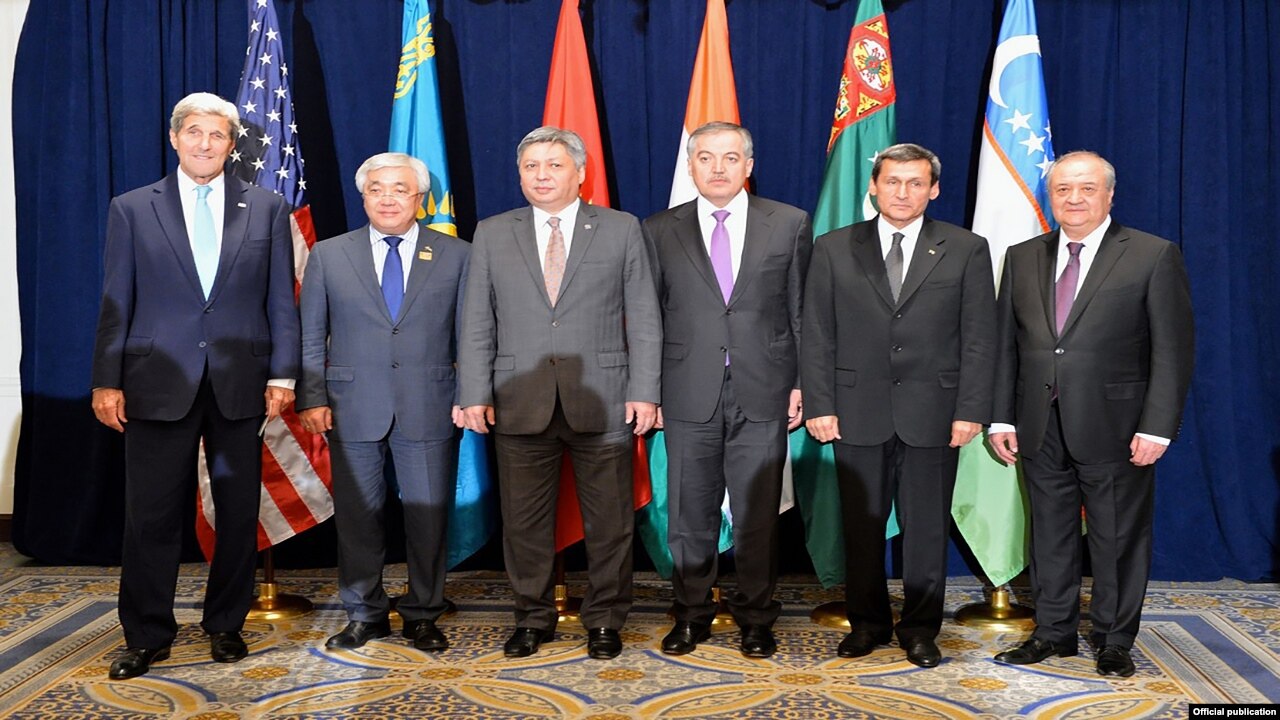
US Secretary of State John Kerry and the foreign ministers of the five Central Asian countries: Erlan Idrissov (Kazakhstan), Erlan Abdyldaev (Kyrgyzstan), Sirojiddin Aslov (Tajikistan), Rashid Meredov (Turkmenistan) and Abdulaziz Kamilov (Uzbekistan), during the C5+1 format on the sidelines of the 70th session of the UN General Assembly in New York, 26 September 2015.
Source: [46].
Despite positive developments in the security and economic spheres during Nazarbayev’s presidency, US–Kazakhstan relations were consistently burdened by human rights and democracy issues. The US Department of State included Kazakhstan every year among countries with serious problems in the rule of law, freedom of expression and the conduct of elections. In 2011 alone, the most serious human rights problems identified were severe restrictions on citizens’ right to change their government; restrictions on freedom of speech, the press, assembly and association; and the lack of an independent judiciary and due process, particularly in cases involving widespread corruption and abuses by law enforcement and the judiciary. Other reported violations included arbitrary or unlawful deprivation of life; hazing in military units resulting in deaths; torture and other abuse of detainees and prisoners; harsh and life-threatening prison conditions; arbitrary arrest and detention; violations of citizens’ right to privacy; restrictions on freedom of religion; excessively stringent requirements for registering political parties; restrictions on the activities of non-governmental organisations; violence and discrimination against women; child abuse; human trafficking; discrimination against people with disabilities and ethnic minorities; societal discrimination against gay, lesbian, bisexual and transgender people, as well as people with HIV/AIDS; forced labour and child labour. The government took modest steps to prosecute officials who committed abuses, particularly in high-profile corruption cases; however, corruption was widespread and impunity prevailed, especially for those linked to the government or law enforcement agencies [47]. In particular, alongside all the issues listed above, there were also electoral problems. Presidential elections had never been recognised by the OSCE as free and fair throughout the country’s more than 30 years of independence [48]. The OSCE report on the 2015 elections emphasised that voters had no real choice in practice because of the absence of genuine political competition, restrictions on freedom of expression, and a weak or non-existent opposition. The organisation’s representative, Cornelia Jonker, said that deep political reforms were needed for the country to hold truly democratic elections [49].
The Zhanaozen events of December 2011 became a particularly acute issue in US–Kazakhstan relations during the country’s first president’s tenure. The events began as early as May that year, when oil company workers went on strike, demanding better working conditions, higher wages and the recognition of independent trade unions. The court ruled the strike illegal, after which the authorities and employers began mass dismissals, harassment and intimidation of the protesters. Despite this, the protest continued for several months and gradually took on a broader political character, as workers began demanding not only economic but also civil rights. The culmination came on 16 December 2011, when security forces violently dispersed a demonstration, using firearms. At least 17 people were killed and dozens injured. The following day, the authorities declared a state of emergency, isolating the city: roads were blocked, and communications and the internet were cut off. The suppression of the protests was followed by a wave of repression: strike participants were detained, the opposition and independent media were harassed, and many protesters were charged with attempting to destabilise the state, extremism and inciting social discord [50].
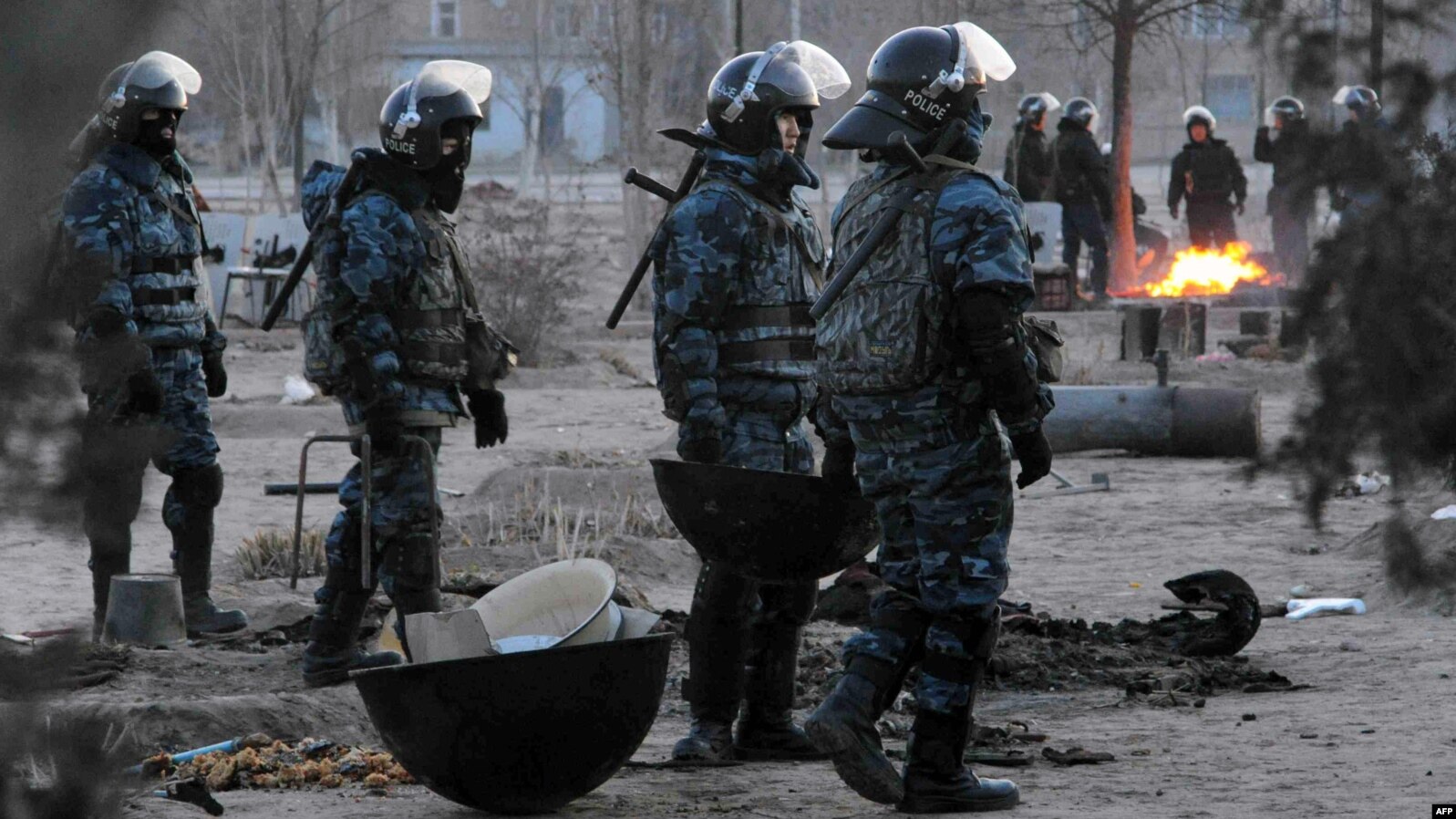
A special police unit patrols the Kazakh city of Zhanaozen shortly after at least 17 striking oil workers were killed in unrest.
Source: [51].
Nevertheless, despite systematic criticism from international human rights organisations and individual Western institutions over restrictions on political freedoms, shortcomings in electoral processes and human rights violations, the United States generally took a pragmatic approach to relations with Kazakhstan. This was because the country’s strategic value remained a priority for Washington: Kazakhstan was seen as a state that had voluntarily renounced the world’s fourth-largest nuclear arsenal after the collapse of the USSR, an important energy partner thanks to its substantial oil and gas reserves, and a key factor in regional stability in Central Asia, particularly against the backdrop of security challenges involving neighbouring states. As a result, these geopolitical and economic interests repeatedly outweighed human rights considerations, shaping a cautious and balanced US policy towards Kazakhstan’s leadership.
Kazakhstan under Tokayev: relations after 2019
In March 2019, Kazakhstan’s president, Nursultan Nazarbayev, who had led the country since independence, officially stepped down, handing the presidency to his protégé, Kassym-Jomart Tokayev, who was then serving as Speaker of the Senate [52]. However, Nazarbayev retained considerable influence through his position as permanent Chairman of the Security Council and leader of the ruling Nur Otan party. Early presidential elections were held on 9 June 2019, and Tokayev won with more than 70% of the vote, although, like all previous elections, these were not recognised by the OSCE as free and fair [53].
On 25 September 2019, Tokayev met Donald Trump on the sidelines of the 74th session of the UN General Assembly. The leaders agreed to strengthen cooperation in politics, trade, the economy, humanitarian relations and security—these were the first steps towards shaping the new Kazakh president’s own bilateral approach [54]. Overall, relations during Tokayev’s first year as president did not differ in any significant way from the ‘Nazarbayev course’: the new government continued to declare its commitment to a ‘multi-vector’ foreign policy and to existing strategic agreements with Washington.
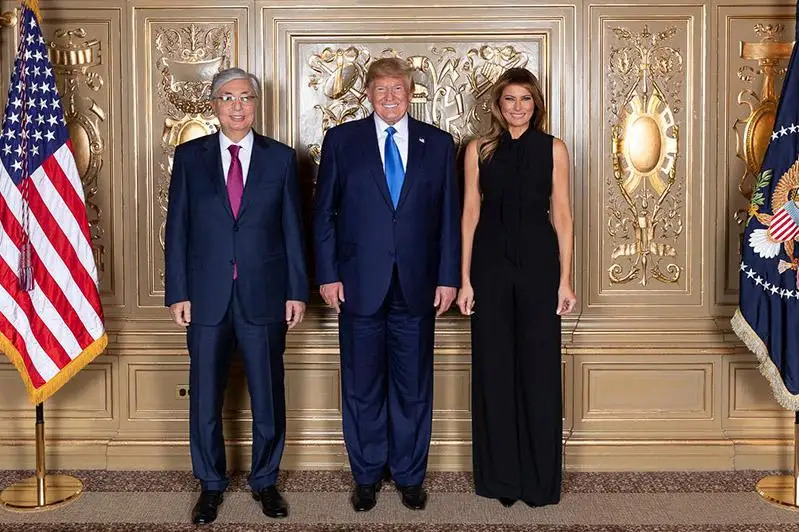
On the sidelines of the 74th session of the UN General Assembly, Kazakhstan’s President Kassym-Jomart Tokayev met with US President Donald Trump.
Source: [54].
The events of early 2022, known in Kazakhstan as “Qandy Qañtar” — “Bloody January” — were a true test for Tokayev and a difficult test for US–Kazakh relations. On 2 January 2022, protests began in the city of Zhanaozen — the same place where striking oil workers were killed in 2011 — prompted by a sharp increase in liquefied petroleum gas prices. They soon escalated into mass anti-government demonstrations across the country. At the height of the crisis, they engulfed Almaty, where gunfire, arson and looting turned the city into a genuine theatre of war [55].
Unable to rely on security forces loyal to his predecessor’s clans, Tokayev took over as chair of the Security Council on 5 January 2022 — a position that was meant to belong to Nazarbayev for life — and requested assistance from the Russian-led Collective Security Treaty Organisation (CSTO). For the first time in its history, the organisation invoked its collective response mechanism, deploying around 3,600 “peacekeepers”, mostly Russian, on Kazakh territory to guard strategic sites. According to official figures, 238 people were killed during the protests, including 19 security personnel, and more than 10,000 people were detained [55].
As soon as the CSTO withdrew its forces from Kazakhstan on 13 January 2022, Tokayev began actively positioning himself as a sovereign leader, distancing himself from Nazarbayev. He dismissed a number of the former president’s relatives and associates from key positions, including Karim Massimov, head of the National Security Committee, who was arrested on suspicion of treason. All these dismissals also indicated that power was passing into other hands. Although Tokayev came to power in 2019, the public saw him as Nazarbayev’s puppet. After Nazarbayev lost his status as “Leader of the Nation”, and the capital — renamed Nur-Sultan from Astana in 2019 — reverted to its former name, Tokayev promised to reform the country [55]. Following these events, Tokayev acknowledged that social discontent was justified and announced a programme of reforms under the banner of “New Kazakhstan” [56].
The United States’ response to the events of “Bloody January” was restrained and ambivalent. Washington expressed concern about the human rights situation and called for tensions in the country to be de-escalated. At the same time, the US State Department refrained from strongly condemning either the CSTO’s “invitation” to Kazakhstan or the violence against protesters, following a pragmatic approach in its relations with an important regional partner [57, ст. 299–300].
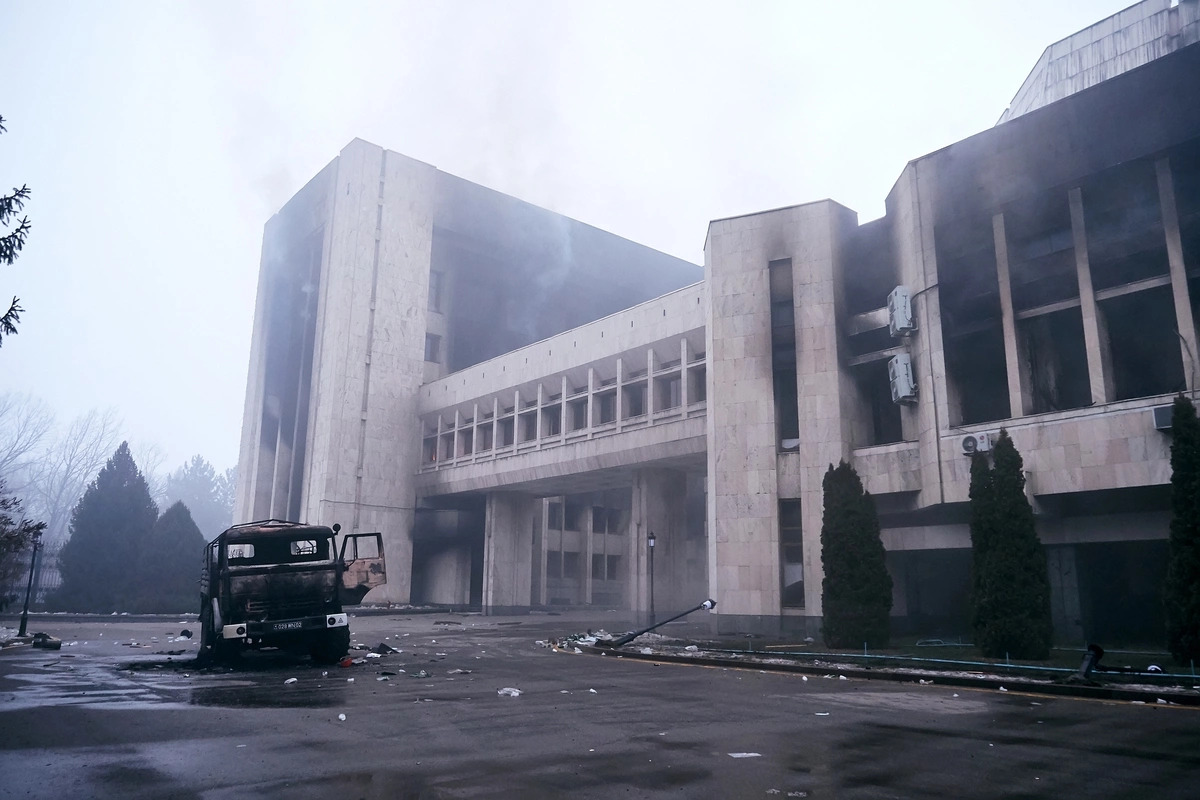
Almaty’s main administrative building after the fire on 6 January 2022.
Source: [55].
Russia’s full-scale invasion of Ukraine on 24 February 2022 placed Kazakhstan in an extremely difficult position. For Tokayev, this meant having to respond to pressure from the Kremlin, maintain relations with Washington and prevent economic upheaval at home all at once. Caught between two fires, he chose a course of “pragmatic neutrality” — the same approach followed by his predecessor, Nazarbayev.
On the one hand, Kassym-Jomart Tokayev took a number of symbolic and practical steps towards the West, seeking to demonstrate Kazakhstan’s foreign policy autonomy amid the worsening international situation following the start of Russia’s full-scale invasion of Ukraine. From the outset of the war, Kazakhstan sought to distance itself from possible accusations of helping Russia circumvent Western sanctions. In April 2022, Timur Suleimenov, deputy head of the presidential administration, stated that the country would not be a tool for circumventing them [58]. And at the St Petersburg International Economic Forum in June 2022 — live on television and in Putin’s presence — Tokayev publicly stated that Kazakhstan did not recognise the so-called “quasi-state entities” in the Donbas or any other possible changes to Ukraine’s borders [59].
On the other hand, the actual economic figures painted a much more complex and less clear-cut picture than the official rhetoric. Despite the declared caution in relations with Russia after the start of the full-scale war, economic interdependence remained high. According to Chatham House estimates, trade between Kazakhstan and Russia did not decline in 2022–2023, but instead reached record highs of approximately 26 and 27 billion US dollars respectively. Analysts estimate that some of this trade may have included both dual-use goods, which are not formally subject to direct prohibitions but may have military applications, and sanctioned goods [60]. These trends towards growth in bilateral trade are only intensifying. In March 2026, Kazakh Prime Minister Olzhas Bektenov stated that trade between the countries could reach 30 billion US dollars this year [61].
Concerns about the re-export of sanctioned goods were borne out by a sharp increase in Kazakhstan’s economic engagement with the West at the same time. The value of goods exported from the European Union to Kazakhstan rose by approximately 90% from the beginning of 2022 to mid-2023, reaching 16.6 billion euros [62]. However, this surge can be partly explained by the replacement of Russian markets and increased trade along new logistics routes, particularly through the Caspian region.
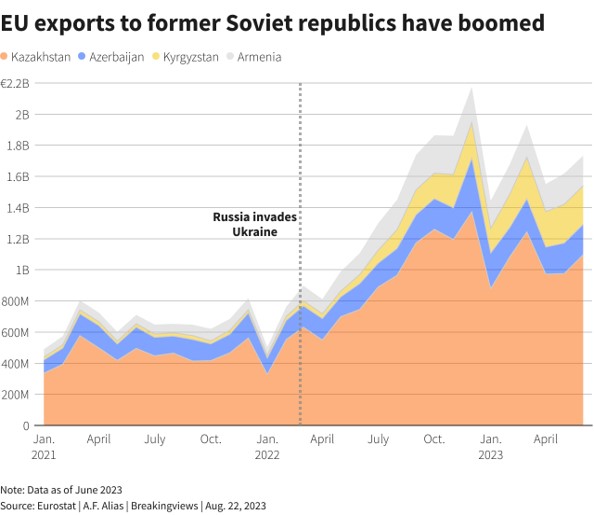
EU exports to the former Soviet republics surged after the start of the full-scale invasion.
Source: [62].
At the same time, it must be acknowledged that Tokayev’s reasoning is understandable in light of geopolitical realities: Kazakhstan shares a border of more than 7,500 kilometres with Russia, its economy is closely intertwined with Russia’s, and its security is largely supported by its membership of the CSTO. A significant proportion of the Russian population lives in the country’s northern regions, and the Russian leadership could use this population in the event of a conflict between the two countries. It is precisely for these reasons that the West is deliberately refraining from imposing sanctions on Kazakhstan, fearing that this could push the country even closer to Beijing and Moscow.
In this context, an important signal from Washington was the position expressed by Daniel Rosenblum, then the US ambassador to Kazakhstan, in a speech to the Caspian Policy Center in Washington in January 2024. He said that the main goal of US policy towards Central Asia was to help these states “stand on their own feet, be fully sovereign and independent countries, able to make their own choices about whom to trade with and whom to have relations with, without excessive external pressure” [63]. In other words, Washington wants countries in the region, including Kazakhstan, to pursue an independent policy without relying too heavily on any one side when making decisions, and for these countries to effectively act as ‘buffer states’.
Despite the contradictions in Astana’s geopolitical balancing act, diplomatic engagement between the two countries remained active in 2022–2025. In December 2022, a further round of the ‘Enhanced Strategic Partnership Dialogue’ took place in Washington. The joint statement issued after the meeting recorded discussions on regional geopolitical issues, global nuclear non-proliferation, counter-terrorism, the diversification of energy and trade infrastructure, climate protection and human rights. The US side then reaffirmed its ‘unwavering support for Kazakhstan’s independence, territorial integrity and sovereignty’ [64]. The ‘C5+1’ summit was also held regularly, with the US side engaging continuously with the countries of Central Asia on pressing regional issues.
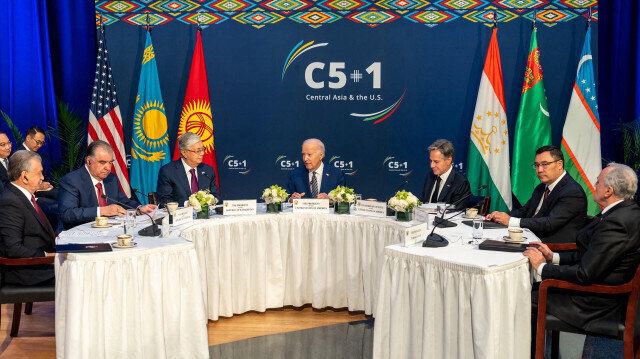
President Biden’s meeting with C5+1 leaders on the sidelines of the 78th session of the UN General Assembly in September 2023.
Source: [65].
But bilateral cooperation truly intensified only after Donald Trump returned to the White House for a second term. Kazakhstan began to engage actively with the United States more broadly. On 6 November 2025, the ‘C5+1’ summit was held, where the deepening of bilateral relations between the countries was discussed, along with the signing of a memorandum to strengthen cooperation in rare earth mining [66]. At the same time, Kazakhstan joined the Abraham Accords, signed during Trump’s first term in 2020 to normalise relations between Israel and Arab countries [67].
On 23 December 2025, President Trump announced that Kazakhstan had been invited to participate in the G20 summit, which the US will host in Miami, Florida, in December 2026 — the first time since 2009. This is the first time a Central Asian country’s leader has been invited to such a forum: although Kazakhstan is not a G20 member, it has been granted invited guest status alongside Uzbekistan [68].
In January 2026, Astana joined the newly established ‘Board of Peace’ to help resolve the war in the Gaza Strip [69].
On 4 February 2026, US Deputy Secretary of State Christopher Landau met Kazakhstan’s Minister of Foreign Affairs, Yermek Kosherbayev, in Washington. The two sides discussed political and economic cooperation, the expansion of trade and investment ties, and engagement in the fields of energy and critical minerals, and reaffirmed their commitment to further developing the ‘Enhanced Strategic Partnership’ [70].
The culmination of the winter round of contacts was President Tokayev’s working visit to Washington on 18–19 February 2026, at Donald Trump’s invitation. The Kazakh leader took part in the inaugural meeting of the ‘Board of Peace’ — a new body chaired by Trump and focused on stabilisation and reconstruction in the Gaza Strip [71]. Kasym-Jomart Tokayev also announced that his country would send military personnel to Gaza, including medical units, although the deployment date and the number of personnel involved in this peacekeeping mission remain unknown [72].
On 15 April 2026, US Secretary of State Marco Rubio met in Washington with Kazakhstan’s Deputy Prime Minister and Minister of National Economy, Serik Zhumangarin, and President Tokayev’s Special Representative for negotiations with the US, Yerzhan Kazykhan. The two sides discussed the country’s role in peacekeeping and regional initiatives and the expansion of economic ties between the states. Rubio welcomed Kazakhstan’s active participation in the C5+1 platform, and Washington once again reaffirmed its support for the republic’s sovereignty, independence and territorial integrity [73]. Particular attention at the meeting was given to implementing the agreements reached during Tokayev’s November 2025 visit to the White House, including joint investment projects estimated to be worth around $20 billion [74]. During the same days, as part of the spring meetings of the World Bank and the IMF, a Kazakh delegation led by Kazykhan held talks in Washington with US politicians, experts and business representatives. Representatives of Chevron, ExxonMobil, PepsiCo, Morgan Stanley, Citi, Nasdaq and Meta attended a round table organised by the US Chamber of Commerce, where energy, critical minerals, infrastructure, digitalisation, artificial intelligence and logistics were discussed. Separately, representatives of the US Department of State held talks with Kazakhstan’s Atomic Energy Agency on cooperation in this field [75].
And on 5 May 2026, Kazakhstan became the first country in Central Asia and the South Caucasus to hold its own investment and trade round table, ‘Strategic Sectors and Opportunities for Entering the US Market’, on the sidelines of the SelectUSA Summit — the US government’s flagship investment platform. The event brought together around 120 participants from government, business and commercial circles in both countries [76].
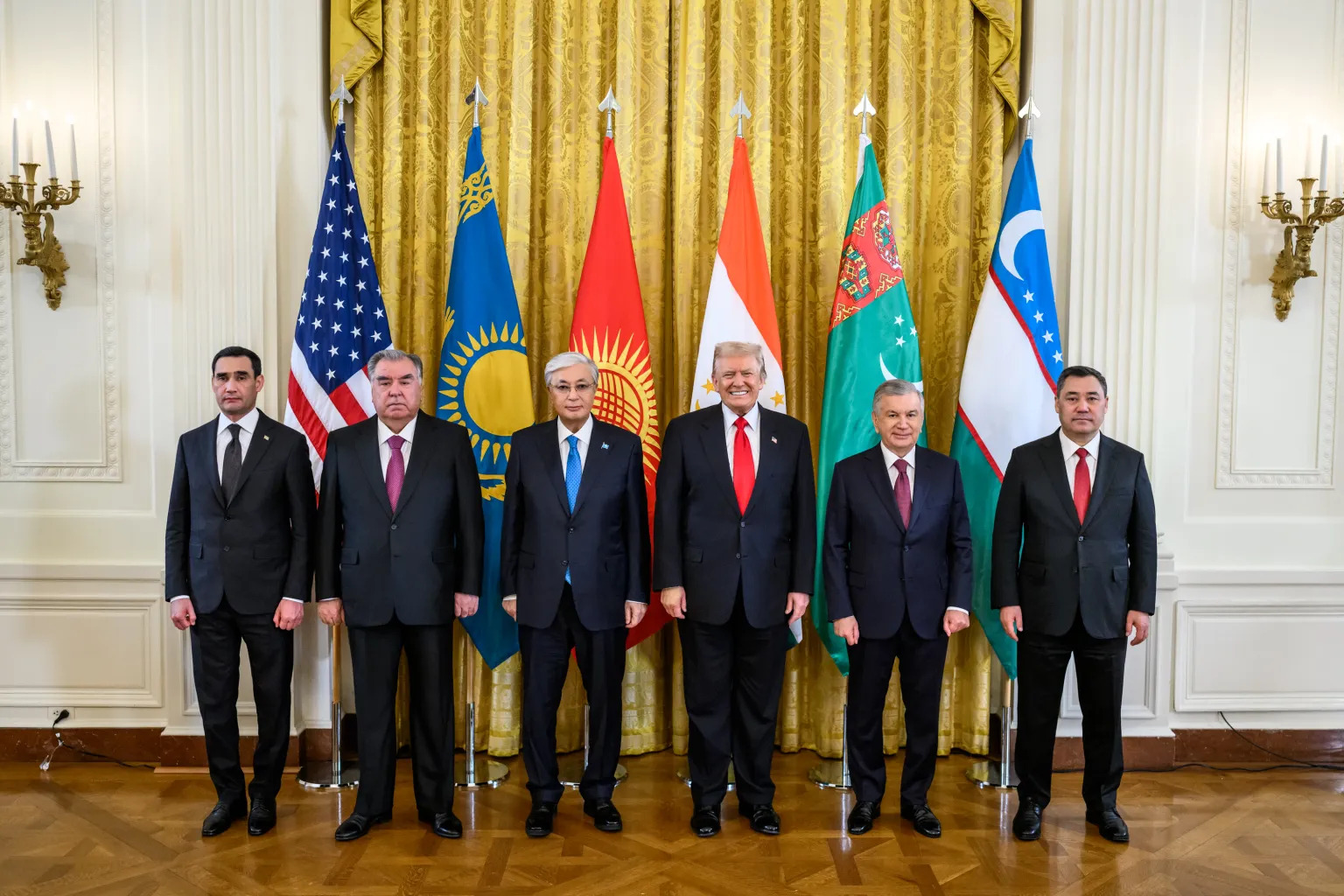
Meeting of the ‘C5+1’ countries at the White House during the ‘C5+1’ summit on 6 November 2025. From left to right: President of Turkmenistan Serdar Berdimuhamedov; President of Tajikistan Emomali Rahmon; President of Kazakhstan Kasym-Jomart Tokayev; US President Donald Trump; President of Uzbekistan Shavkat Mirziyoyev; President of the Kyrgyz Republic Sadyr Japarov.
Source: [77].
In summarising the Tokayev era in the context of relations with Washington, it is worth emphasising that the bilateral partnership is experiencing one of its most dynamic and substantive periods since the nuclear disarmament of the 1990s. Tokayev, both heir to and reformer of the Nazarbayev system, has built relations with Washington on three interlinked pillars: economic, mineral-resource and geopolitical (the C5+1 platform and the ‘Middle Corridor’). Geopolitical circumstances — above all, Russia’s full-scale aggression against Ukraine — have brought both sides closer together, despite the evident contradictions in Kazakhstan’s foreign and domestic policies.
The US side is increasingly recognising that the key to successfully engaging Kazakhstan lies not in insisting on immediate democratisation, but in offering concrete alternatives — economic, technological and transit-related — that make Astana as dependent on the West as it is today on Moscow and Beijing. In this sense, signing the memorandum on critical minerals forms part of a broader strategy: tying Kazakhstan to the American orbit through mutually beneficial economic dependence, rather than external pressure based on values.
Conclusions
Relations between Kazakhstan and the United States, which began more than three decades ago against the backdrop of the collapse of the Soviet Union, have travelled a complex and multifaceted path from ad hoc cooperation on nuclear disarmament to a fully fledged strategic partnership of global importance. Despite differences in size, geopolitical position and values, the two countries have managed to build fairly robust and substantive bilateral relations—relations that have repeatedly been tested by both regional crises and global upheavals.
The nuclear issue was the starting point for this cooperation. Having inherited the world’s fourth-largest nuclear arsenal, Kazakhstan made the fundamentally important choice to disarm voluntarily. Unlike Ukraine, which negotiated for a long time over the terms of transferring its weapons, President Nazarbayev consistently and purposefully led the country towards nuclear-free status, recognising that nuclear weapons were not a shield but a burden for a young state facing possible international isolation. Project Sapphire, the dismantling of intercontinental ballistic missile silos and participation in the Nunn–Lugar programme became not only instruments of non-proliferation but also the first concrete signs of genuine trust between the two states. This choice in the 1990s laid the foundations for all subsequent cooperation, opening the door to much broader engagement between the two countries.
Energy cooperation was a natural continuation of this rapprochement and later became the economic ‘backbone’ of bilateral relations. American corporations played a key role in turning Kazakhstan into a major player in the global oil market. No less important was US involvement in financing the Caspian Pipeline Consortium, which still handles up to 80% of Kazakhstan’s oil exports. For Washington, this cooperation formed part of a broader strategy: diversifying hydrocarbon supply sources and strengthening its geopolitical presence in Eurasia, a strategy dating back to the 1980 Carter Doctrine. At the same time, excessive dependence on transit through Russian territory remained a structural vulnerability in Kazakhstan’s energy model—a vulnerability that became particularly acute after 2022 and made the development of alternative routes, above all the Trans-Caspian Corridor, a shared strategic priority for both countries.
Alongside the economic dimension, the diplomatic architecture of bilateral relations gradually took shape. From the 1994 Charter on Democratic Partnership and counter-terrorism cooperation after the events of 11 September 2001 to the 2018 status of ‘Enhanced Strategic Partnership’, each step marked a qualitative deepening of engagement between the parties. The launch of the C5+1 format in 2015 gave Washington an effective multilateral instrument for projecting influence across the whole of Central Asia, allowing it to engage with countries in the region without Russia and China. At the same time, these relations were consistently burdened by an inherent contradiction between declared democratic values and Washington’s pragmatic approach. Systematic human rights violations, the authoritarian nature of Kazakhstan’s system, the Zhanaozen tragedy of 2011 and presidential elections, none of which in more than thirty years of independence had been recognised by the OSCE as free and fair—all of this never became a genuine basis for revising US policy towards Astana. Kazakhstan’s strategic value—nuclear, energy-related and geopolitical—consistently outweighed human rights concerns, shaping a cautious and balanced US position.
The Tokayev era ushered in a qualitatively new level of bilateral engagement, although it began without any abrupt breaks: the new president initially adhered consistently to the ‘Nazarbayev course’ of multi-vector foreign policy. The real tests were ‘Bloody January’ in 2022, which exposed the fragility of the domestic political balance, and Russia’s full-scale invasion of Ukraine, which fundamentally changed the geopolitical landscape around Kazakhstan. Caught between powerful neighbours and mounting pressure from the West, Tokayev chose a course of ‘pragmatic neutrality’—the same approach his predecessor had once followed. On the one hand, Kazakhstan publicly distanced itself from Russian aggression, refused to recognise the occupied territories and declared that it did not wish to become a tool for circumventing sanctions; on the other, trade with Russia not only failed to decline but continued to grow. The reality proved far more complex than the official rhetoric, and the West—aware of the geopolitical realities facing a country with a 7,500-kilometre border with Russia—deliberately refrained from putting Astana under sanctions pressure, fearing it would push the country even closer to Moscow and Beijing.
Despite these contradictions, it was during the Tokayev era that relations between the two countries became more dynamic and substantive than at any time since the nuclear disarmament of the 1990s. Kazakhstan’s participation in the Abraham Accords, the signing of a memorandum on critical minerals and its involvement in the Board of Peace on Gaza all show that Astana is increasingly choosing to align itself with Washington. For its part, the United States is becoming increasingly aware that the key to successfully engaging Kazakhstan lies not in insisting on immediate democratisation, but in offering concrete alternatives—economic, technological and transit-related. The signing of the memorandum on critical minerals is part of precisely this logic: binding Kazakhstan to the American sphere of influence through mutually beneficial economic interdependence rather than external pressure.
Thus, the evolution of relations between Kazakhstan and the United States from the nuclear disarmament of the 1990s to the strategic partnership of the 2020s demonstrates a persistent underlying pattern: Washington consistently prioritised geopolitical and economic interests over values, while Astana skilfully used this pragmatism to strengthen its own sovereignty and attract foreign investment. The current period—with its focus on critical minerals, the diversification of transport corridors and geopolitical rebalancing—is among the most eventful in the history of bilateral relations. The key challenge for both sides remains the search for a new and lasting equilibrium: one in which mutual interest does not displace genuine sovereignty, and the strategic partnership remains resilient regardless of the shifting dynamics of great-power geopolitics.
Sources
Forbes Kazakhstan. (2025). Tokayev and Trump hold talks at the White House.
https://forbes.kz/articles/tokaev-i-tramp-proveli-peregovory-v-belom-dome-58a5b0
The Diplomat. (2022, February 23). How did Kazakhstan give up the bomb?
https://thediplomat.com/2022/02/how-did-kazakhstan-give-up-the-bomb/
U.S. Congress. (1991). H.R. 3807: Soviet Nuclear Threat Reduction Act of 1991 (102nd Cong.). Congress.gov.
https://www.congress.gov/bill/102nd-congress/house-bill/3807
The Acronym Institute for Disarmament Diplomacy. (1998, July). Cooperative Threat Reduction (CTR) programme funding (Disarmament Diplomacy, Issue No. 28).
https://www.acronym.org.uk/old/archive/28ctr.htm
United Nations. (2024). Report of the Secretary‑General on international cooperation and coordination for the human and ecological rehabilitation and economic development of the Semipalatinsk region of Kazakhstan, A/78/312.
https://docs.un.org/en/A/78/312
United Nations. (1992). General Assembly document A/47/60.
https://docs.un.org/en/A/47/60
U.S. Department of State. (1992, May 23). Protocol to the Treaty between the United States of America and the Union of Soviet Socialist Republics on the Reduction and Limitation of Strategic Offensive Arms (Lisbon Protocol).
https://2009-2017.state.gov/documents/organization/27389.pdf
Korrespondent.net. (2013, 23 May). 23 May: This day in history.
https://ua.korrespondent.net/world/1562071-23-travnya-den-v-istoriyi
Arms Control Association. (2020, December). The Lisbon Protocol at a glance.
https://www.armscontrol.org/factsheets/lisbon-protocol-glance
U.S. Department of State. (1993, December 13). Agreement between the United States of America and the Republic of Kazakhstan concerning the elimination of infrastructure for weapons of mass destruction and the prevention of proliferation of nuclear weapons.
https://www.state.gov/wp-content/uploads/2019/02/09-616.1-Kazakhstan-Weapons-Nonpro-Agrmt-and-Extens.pdf
Nuclear Threat Initiative. (2025). Kazakhstan nuclear disarmament.
U.S. Embassy & Consulate in Kazakhstan. (2024, November 25). Project Sapphire: 30 years of U.S.–Kazakhstan nuclear security cooperation.
https://kz.usembassy.gov/project-sapphire-30-years-of-u-s-kazakhstan-nuclear-security-cooperation/
Omirgazy, D. (2024, November 26). Project Sapphire: 30th anniversary of U.S.–Kazakh mission to promote safer & more secure world. The Astana Times.
https://astanatimes.com/2024/11/project-sapphire-30th-anniversary-of-us-kazakh-mission-to-promote-safer-more-secure-world/
James Martin Center for Nonproliferation Studies. (2010). Kazakhstan nuclear chronology (NTI backgrounder).
https://www.nti.org/wp-content/uploads/2021/09/kazakhstan_nuclear.pdf
Astakhov, I. (2025, November 10). From missiles to scrap: Kazakhstan is still clearing the remains of its nuclear past. Orda English.
https://en.orda.kz/from-missiles-to-scrap-kazakhstan-is-still-clearing-the-remains-of-its-nuclear-past-9189/
Qazinform. (2024, September 2). 125 years of progress: Kazakhstan’s journey to becoming a global oil and gas powerhouse.
https://qazinform.com/news/125-years-of-progress-kazakhstans-journey-to-becoming-a-global-oil-and-gas-powerhouse-32e7f2
The Astana Times. (2025, February 13). Kazakhstan’s proved oil reserves reach 30 billion barrels.
https://astanatimes.com/2025/02/kazakhstans-proved-oil-reserves-reach-30-billion-barrels/
U.S. Energy Information Administration. (2019, January 7). Kazakhstan: Background.
https://www.eia.gov/international/analysis/country/KAZ/background
Nussupova, A. (2023, April 10). Tengiz: Behind the scenes of the deal of the century. Caspian Barrel.
Campbell, G. A. (2023). Carter orders deregulation of oil prices. EBSCO Research Starters. https://www.ebsco.com/research-starters/history/carter-orders-deregulation-oil-prices
Nussupova, A. (2023, April 8). Tengiz: Behind the scenes of the deal of the century. The Astana Times.
https://astanatimes.com/2023/04/tengiz-behind-the-scenes-of-the-deal-of-the-century/
Yuvakuran. (2007, August 25). Kazakhstan Tengiz oil fields, June 1996. Blogger.
https://yuvakuran.blogspot.com/2007/08/kazakhstan-tengiz-oil-fields-june-1996.html
Chevron Corporation. (2021). Chevron and Kazakhstan: The power of partnership.
https://www.chevron.com/-/media/chevron/worldwide/documents/chevron-kazakhstan-partnership.pdf
KazMunayGas. (n.d.). North Caspian Project.
https://www.kmg.kz/en/press-center/media/severo-kaspiyskiy-proekt/
PSA LLC. (n.d.). North Caspian project.
https://psa.kz/en/proekty/?ELEMENT_ID=907
NS Energy. (n.d.). Kashagan oil field development, North Caspian Sea, Kazakhstan. https://www.nsenergybusiness.com/projects/kashagan-oil-field-development/
Eurasian Research Institute. (2016). Current challenges for the Kashagan offshore oil field project.
https://www.eurasian-research.org/publication/current-challenges-for-the-kashagan-offshore-oil-field-project
Business & Human Rights Resource Centre. (2021, June). North Caspian Operating Company.
https://media.business-humanrights.org/media/documents/North_Caspian_Operating_Company.pdf
The White House. (2001, November 13). Caspian Pipeline Consortium fact sheet. https://georgewbush-whitehouse.archives.gov/news/releases/2001/11/20011113-17.html
BlackSea. (2025, May 30). The Caspian Pipeline Consortium (CPC): Strategic backbone of Kazakhstan’s crude oil exports and its geopolitical implications.
https://black-sea.com.tr/the-caspian-pipeline-consortium-cpc/
U.S. Energy Information Administration. (2013, September 12). Caspian countries are developing new oil and natural gas export capacity.
https://www.eia.gov/todayinenergy/detail.php?id=12931
International Finance Corporation. (n.d.). Baku–Tbilisi–Ceyhan (BTC) pipeline project. https://disclosures.ifc.org/project-detail/SPI/11251/baku-tiblisi-ceyhan-pipeline
BankTrack. (2015, November 1). Baku–Tbilisi–Ceyhan oil pipeline. https://www.banktrack.org/project/baku_tbilisi_ceyhan_oil_pipeline
Civil Diplomat. (2026, 11 February). The Trans-Caspian International Transport Route as the New Silk Road: Ukraine’s Role in Shaping Transit Opportunities.
Mind.ua. (2024, January 29). The EU wants to invest €10 billion in the Trans-Caspian Corridor, which connects Europe and Central Asia.
https://mind.ua/news/20268825-es-hoche-vklasti-10-mlrd-evro-u-transkaspijskij-koridor-shcho-z-ednue-evropu-i-centralnu-aziyu
U.S. Department of State. (n.d.). U.S. relations with Kazakhstan.
https://2021-2025.state.gov/u-s-relations-with-kazakhstan/
The White House. (1994, February 14). Remarks by President Clinton and President Nazarbayev of Kazakhstan in signing ceremony and press availability.
https://clintonwhitehouse6.archives.gov/1994/02/1994-02-14-presidents-remarks-in-signing-with-president-nazarbayev.html
Radio Free Europe/Radio Liberty. (2019, March 20). Toqaev sworn in as Kazakhstan’s acting president.
https://gandhara.rferl.org/a/toqaev-sworn-in-as-kazakhstan-s-acting-president/29831732.html
Engels, S. (2018, March). Cooperation between Kazakhstan and the United States in military professionalization programs (Occasional Paper Series No. 29). George C. Marshall European Center for Security Studies. https://www.marshallcenter.org/en/publications/occasional-papers/cooperation-between-kazakhstan-and-united-states-military-professionalization-programs-0
McDermott, R. (2005, May 19). Kazakhstan’s emerging role in the war on terror. Jamestown Foundation.
https://jamestown.org/kazakhstans-emerging-role-in-the-war-on-terror/
Jamestown Foundation. (2009, June 18). Kazakh soldiers during a military exercise at Ili range outside Almaty September 23, 2008 [Photograph].
https://jamestown.org/astana-steps-closer-to-military-alliance-with-moscow/kazakh-soldiers-during-a-military-exercise-at-ili-range-outside-almaty-september-23-2008/
Starr, S. F., & Cornell, S. E. (2021). Strong and unique: The U.S.-Kazakhstan partnership over three decades. Central Asia-Caucasus Institute & Silk Road Studies Program. https://www.isdp.eu/wp-content/uploads/2021/12/The-US-Kazakh-Partnership-1-1-1.pdf
World Bank. (n.d.). Kazakhstan trade profile (WITS): Exports, imports, and trade indicators. https://wits.worldbank.org/CountryProfile/en/Country/KAZ/StartYear/1995/EndYear/2023/TradeFlow/Export/Partner/ALL/Indicator/XPRT-TRD-VL
U.S. Department of State. (n.d.). C 5+1
https://www.state.gov/c51
Kassenova, N. (2018). New chapter in Kazakhstan–U.S. relations. Eurasian Research Institute.
https://www.eurasian-research.org/publication/new-chapter-in-kazakhstan-u-s-relations/
Radio Free Europe/Radio Liberty. (2015, October 29). Kerry, Central Asia, journalists call for freedom. Gandhara.
https://gandhara.rferl.org/a/kerry-central-asia-journalists-call-freedom/27333011.html
U.S. Department of State. (2012). 2011 country reports on human rights practices: Kazakhstan.
https://2009-2017.state.gov/j/drl/rls/hrrpt/2011/sca/186466.htm
OSCE Parliamentary Assembly. (2012, January 16). Kazakh election was not democratic, say vote monitors.
https://www.oscepa.org/en/news-a-media/press-releases/press-2012/kazakh-election-was-not-democratic-say-vote-monit
Radio Liberty. (2015, April 27). Kazakh voters had limited choice in the vote – OSCE.
https://www.radiosvoboda.org/a/26981470.html
Open Dialogue Foundation. (2013, December 17). The second anniversary of the Zhanaozen tragedy.
Radio Free Europe/Radio Liberty. (2021, December 19). Majlis podcast: 10 years later, many questions remain about the Zhanaozen violence.
https://www.rferl.org/a/majlis-podcast-zhanaozen-violence-2011/31616209.html
BBC News Ukraine. (2019, March 19). Nazarbayev steps down: what does it mean for Kazakhstan? https://www.bbc.com/ukrainian/news-47628000
BBC News. (2019, June 9). Kazakhstan election: Tokayev wins amid protests. https://www.bbc.com/news/world-asia-48580226
Nurmaganbetova, Z. (2019, September 25). Kassym-Jomart Tokayev, Donald Trump meets in New York. Kazinform.
https://qazinform.com/news/kassym-jomart-tokayev-donald-trump-meet-in-new-york_a3569320
Mekhdi, L. (2023, December 25). Qandy Qantar: Kazakh tragedy of January 2022. The Caspian Post.
https://caspianpost.com/stories/qandy-qantar-kazakh-tragedy-of-january-2022
Bikeneeva, K. (2022, March 21). How the President Sees the ‘New Kazakhstan’. Optimism.kz.
https://optimism.kz/2022/03/21/kakim-vidit-novii-kazahstan-prezident/
Terzyan, A. (2022). Kazakhstan amid unrest and instability: Main implications. Journal of Liberty and International Affairs, 8(3), 295–306.
https://www.ssoar.info/ssoar/bitstream/handle/document/83655/ssoar-jlibertyintaff-2022-3-terzyan-Kazakhstan_amid_unrest_and_instability.pdf
Ukrinform. (2022, April 1). Kazakhstan won’t be tool to circumvent sanctions against Russia, top Kazakh official says.
https://www.ukrinform.net/rubric-ato/3445695-kazakhstan-wont-be-tool-to-circumvent-sanctions-against-russia-top-kazakh-official-says.html
Ministry of Foreign Affairs of the Republic of Kazakhstan. (2022, June 18). Kazakhstan’s president addresses challenging issues on international agenda and relations with Russia at Saint Petersburg Economic Forum. https://www.gov.kz/memleket/entities/mfa/press/news/details/390248?lang=en
Mallinson, K. (2024, February 29). Russia’s influence in Kazakhstan is increasing despite the war in Ukraine. Chatham House.
https://www.chathamhouse.org/2024/02/russias-influence-kazakhstan-increasing-despite-war-ukraine
Kazinform International News Agency. (2026, March 25). Trade turnover between Kazakhstan and Russia nears $30 billion, says Olzhas Bektenov.
https://qazinform.com/news/trade-turnover-between-kazakhstan-and-russia-nears-30-billion-says-olzhas-bektenov-b6fdf3
Briançon, P. (2023, August 29). Shady export leaks suggest Russian sanctions work. Reuters.
https://www.reuters.com/breakingviews/shady-export-leaks-suggest-russian-sanctions-work-2023-08-29/
Imamova, N. (2024, January 14). U.S. ambassador to Kazakhstan outlines U.S. engagement in Central Asia. Voice of America.
https://www.voanews.com/a/us-ambassador-to-kazakhstan-outlines-us-engagement-in-central-asia/7440100.html
U.S. Embassy & Consulate in Kazakhstan. (2022, December 7). Joint statement on the United States–Kazakhstan enhanced strategic partnership dialogue.
https://kz.usembassy.gov/joint-statement-on-the-united-states-kazakhstan-enhanced-strategic-partnership-dialogue/
Chidiac, I. (2023, September 25). The C5+1 summit: Biden’s tactic—simultaneously “astute” and “myopic”. Policies Forum.
https://www.policiesforum.me/en/articles/the-c5-1-summit-biden-s-tactic-simultaneously-astute-and-myopi/
Fisayo-Bambi, J. (2025, November 7). Trump hails Central Asian leaders after White House meeting to forge critical mineral ties. Euronews.
https://www.euronews.com/2025/11/07/trump-hosts-central-asian-leaders-ias-us-seeks-to-deepen-critical-mineral-ties
Glushchenko, O. (2025, 7 November). Trump: Kazakhstan has joined the Abraham Accords. Ukrainska Pravda.
https://www.pravda.com.ua/news/2025/11/07/8006238/
Euronews. (2025, December 23). Trump extends invitations to Kazakh and Uzbek presidents for Miami G20 summit.
https://www.euronews.com/2025/12/23/trump-extends-invitations-to-kazakh-and-uzbek-presidents-for-miami-g20-summit
Khassenkhanova, G. (2026, January 22). Kazakhstan joins Donald Trump’s “Board of Peace” as one of 19 founding countries. Euronews. https://www.euronews.com/2026/01/22/kazakhstan-joins-donald-trumps-board-of-peace-as-one-of-19-founding-countries
Qazinform International News Agency. (2026, February 5). Kazakhstan, U.S. reaffirm enhanced strategic partnership in Washington talks.
https://qazinform.com/news/kazakhstan-us-reaffirm-enhanced-strategic-partnership-in-washington-talks-a51f37
Voronova, S. (2026, February 19). Tokayev attends the inaugural meeting of the Board of Peace in Washington. Kursiv Media.
https://kz.kursiv.media/2026-02-19/svvo-tokaev-uchastvuet-v-inauguraczionnom-zasedanii-soveta-mira-v-vashingtone/
Rowlands, L. (2026, February 20). Indonesia, Morocco, Kosovo among 5 countries to send troops under Gaza plan. Al Jazeera.
https://www.aljazeera.com/news/2026/2/20/indonesia-morocco-kosovo-among-5-countries-to-send-troops-under-gaza-plan
U.S. Department of State. (2026, April 15). Secretary Rubio’s Meeting with Kazakhstan Deputy Prime Minister and Minister of National Economy Zhumangarin. https://www.state.gov/releases/office-of-the-spokesperson/2026/04/secretary-rubios-meeting-with-kazakhstan-deputy-prime-minister-and-minister-of-national-economy-zhumangarin/
Qazinform International News Agency. (2026, April 16). Kazakh President’s Special Envoy, U.S. Secretary of State Hold Talks.
https://qazinform.com/news/kazakh-presidents-special-envoy-us-secretary-of-state-hold-talks-d74a85
Omirgazy, D. (The Astana Times). (2026, April 16). Kazakhstan, US Deepen Strategic Partnership Across Energy, Transport, Investment Sectors.
https://astanatimes.com/2026/04/kazakhstan-us-deepen-strategic-partnership-across-energy-transport-investment-sectors/
Qazinform International News Agency. (2026, May 5). Kazakhstan Becomes First Central Asian Country to Present Projects at SelectUSA Investment Summit.
https://qazinform.com/news/kazakhstan-becomes-first-central-asian-country-to-present-projects-at-selectusa-investment-summit-17958e/amp
The White House. (2025). President Donald Trump hosts a dinner with leaders of C5 Central Asian countries in the East Room of the White House. https://www.whitehouse.gov/gallery/president-donald-trump-hosts-a-dinner-with-leaders-of-c5-central-asian-countries-in-the-east-room-of-the-white-house/