What the 26th SCO Summit in Bishkek revealed: key statements, trends and outcomes


Oleksii Feshchenko, analyst at the Civil Diplomacy Foundation
From 31 August to 1 September 2026, Kyrgyzstan’s capital hosted several major events at once, overlapping and amplifying one another. Bishkek held the 26th summit of the Shanghai Cooperation Organisation (SCO), a landmark occasion as the SCO marked its 25th anniversary this year. The same days coincided with celebrations of the Independence Day of the Kyrgyz Republic and the opening of the 6th World Nomad Games. This convergence of dates seemed no accident, but a deliberate arrangement by the summit’s hosts: Bishkek sought to turn an ordinary diplomatic meeting into an event of national significance, demonstrating Kyrgyzstan’s growing international standing after chairing the Organisation four times since its founding in 2001.
Anniversary summit, Independence Day and World Nomad Games
The summit was held under the slogan ‘25 Years of the SCO: Together Towards Sustainable Peace, Development and Prosperity’. Kyrgyzstan’s President Sadyr Japarov, who chaired the meeting, said in his welcome address that over a quarter of a century the Organisation had evolved from a mechanism for strengthening trust along borders into one of the leading international structures. He added that unity was the foundation for the bloc’s future development. According to him, SCO countries now account for more than 40 per cent of the world’s population and around a quarter of global GDP. He also noted that nearly 200 thematic events had been held during Kyrgyzstan’s chairmanship.
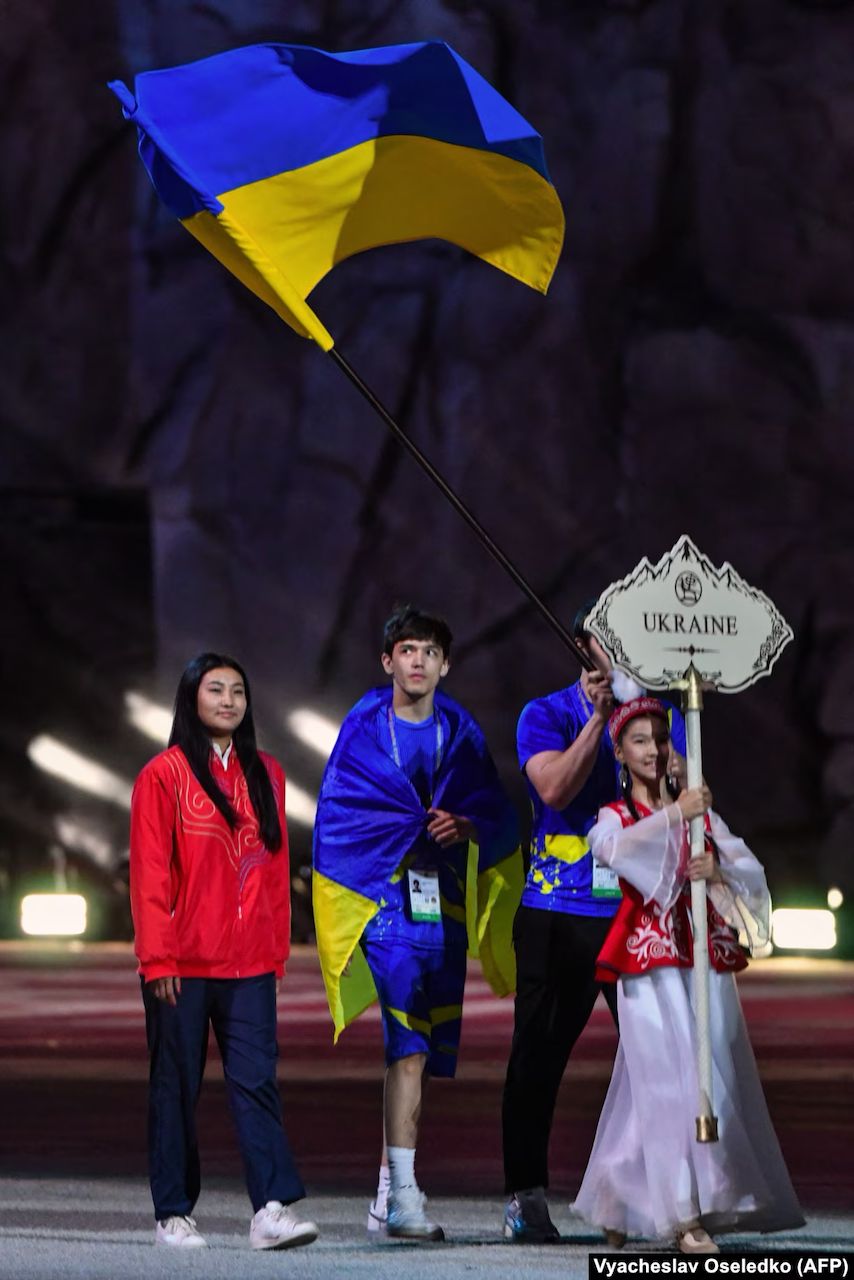
The opening ceremony of the 6th World Nomad Games took place that same day, 31 August, at the newly built Bishkek Arena, which has a capacity of 51,000 spectators, and was timed to coincide with Kyrgyzstan’s Independence Day. Almost all the leaders who had arrived for the SCO summit attended, including the presidents of Russia, Türkiye, Kazakhstan, Uzbekistan, Azerbaijan, Tajikistan, Belarus, Mongolia and Iran. One important detail is that Ukraine also took part in this year’s Games, represented by two Crimean Tatar athletes competing in traditional belt wrestling. Despite the team’s modest size, this was an important cultural and diplomatic signal that Ukraine is ready to strengthen this channel of engagement with the region.
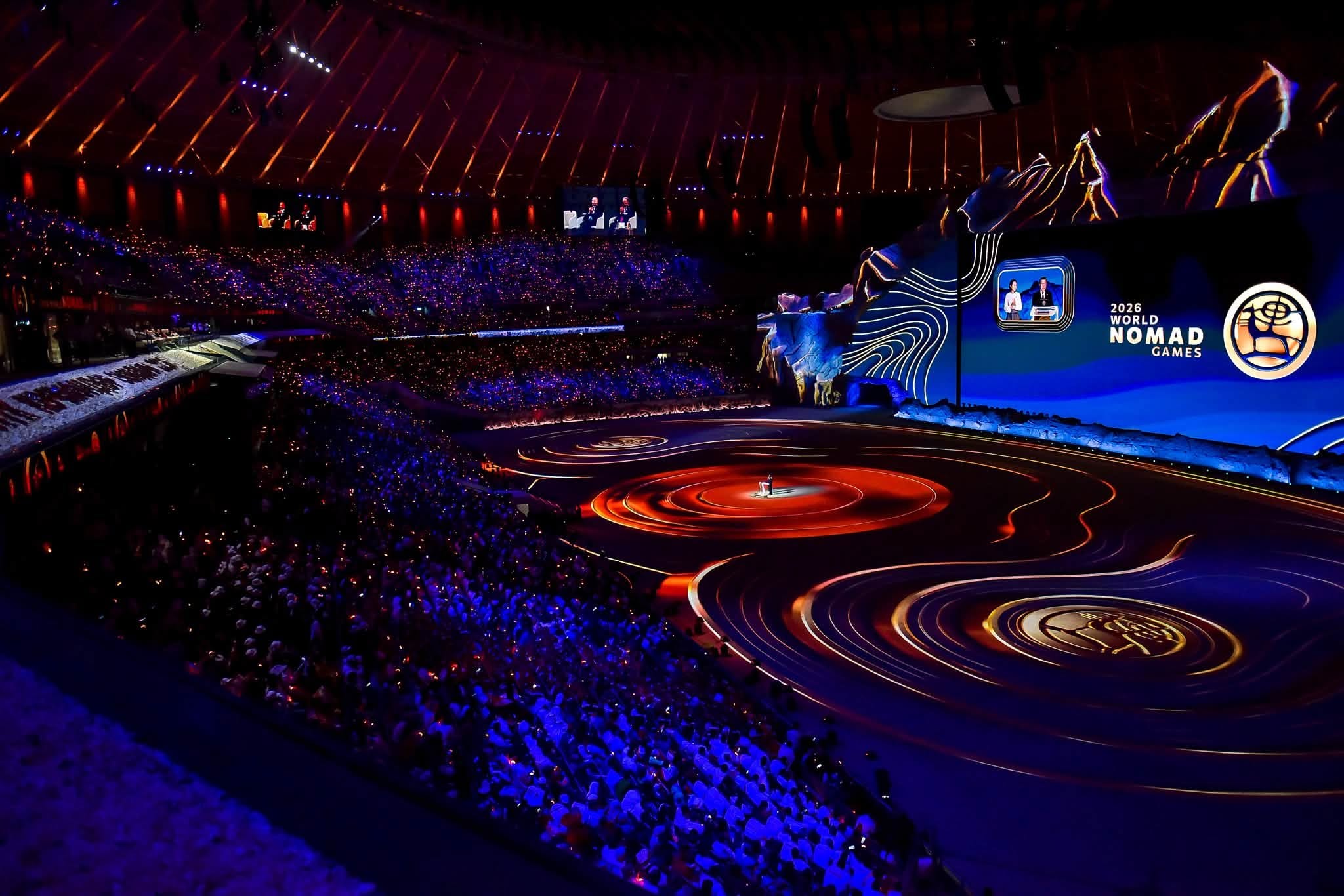
Official opening ceremony of the 6th World Nomad Games in Bishkek, at the ‘Bishkek Arena.’
Available at: https://www.facebook.com/photo?fbid=1387062576938032&set=pcb.1387062836938006
Overall, combining a sporting and cultural celebration with a diplomatic summit significantly tightened security measures in the city, while also giving the Kyrgyz authorities an opportunity to present the capital and the country as a whole to their guests in a favourable light.
Main agenda items
The SCO has 10 full members: Russia, Belarus, India, Iran, Kazakhstan, Kyrgyzstan, China, Pakistan, Tajikistan and Uzbekistan. In addition to the Council of Heads of State meeting in its traditional format, Bishkek hosted an expanded ‘SCO Plus’ meeting attended by partner countries: Azerbaijan, Armenia, Vietnam, Türkiye, Egypt and Togo.
At the end of two days of work, the leaders adopted 28 outcome documents, including the key Bishkek Declaration marking the SCO’s 25th anniversary and a protocol amending and supplementing the Organisation’s Charter of 7 June 2002. The agreed decisions included provisions for a Universal Centre for Countering Security Challenges and Threats, which will incorporate a Centre for Combating Transnational Organised Crime and an Information Security Centre, as well as an SCO Anti-Drug Centre.
In addition, participants signed a Memorandum of Understanding between the SCO Secretariat and the African Union Commission. They decided to designate Lahore, Pakistan, as the SCO’s tourism and cultural capital for 2026–2027, and agreed on a number of statements and decisions concerning counter-terrorism, cooperation in artificial intelligence, energy, logistics and green technologies. The participants also agreed to make English the SCO’s third official and working language, alongside Chinese and Russian.
A significant part of the discussions focused on security. On the eve of the official meetings, Indian Prime Minister Narendra Modi emphasised the region’s need to be free from terrorism, separatism and extremism. In his speech, he called for ‘the entire ecosystem of terrorism to be dismantled: its financing, recruitment, radicalisation and safe havens’, stressing that there could be no double standards on terrorism. In the Bishkek Declaration, the member states condemned terrorism in all its forms and emphasised that double standards in the fight against it were unacceptable.
Economic integration was the second overarching theme. Kazakhstan’s President Kassym-Jomart Tokayev said that trade between SCO countries had reached one trillion dollars. Uzbekistan’s President Shavkat Mirziyoyev, in turn, proposed establishing a bank to finance interregional projects, natural resource management, digital services and healthcare. He also agreed with the Chinese president to increase bilateral trade from 18 to 30 billion dollars in the coming years. Separately, the idea of a fully fledged SCO Development Bank, which Kyrgyzstan had actively promoted as chair of the Organisation, did not receive final approval: the decision was postponed, while Kazakhstan proposed hosting the future institution’s headquarters.
The longstanding idea of establishing a fully fledged SCO Development Bank, which Kyrgyzstan had actively promoted as chair of the Organisation this year, attracted attention. However, the initiative did not receive final approval: the decision was postponed, while Kazakhstan proposed hosting the future institution’s headquarters.
The third group of issues concerned logistics integration, digital cooperation and energy security. The leaders discussed new transport corridors; India, in particular, called for transparent routes that respected sovereignty, such as the North–South International Transport Corridor. Türkiye’s President Recep Tayyip Erdoğan, speaking as a representative of a partner country, described the SCO as a ‘rising star’ with a population of 3.5 billion and a combined GDP of 35 trillion dollars, emphasising the importance of uninterrupted and secure transport corridors and energy supplies. He also said that Ankara aspired to integrate the Trans-Caspian Corridor with China’s Belt and Road Initiative to give the SCO reliable access to European markets.
Another topic raised in all the speeches concerned attitudes towards US and Israeli actions against Iran. In the joint Bishkek Declaration, the member states condemned the strikes on Iran, describing them as a violation of international law, and called for the situation to be resolved exclusively through political and diplomatic means. The Organisation’s leaders also declared their firm opposition to any unilateral coercive measures (sanctions) imposed outside the UN Security Council. In their view, such restrictions contravene World Trade Organization (WTO) rules and have a destructive impact on the global economy.
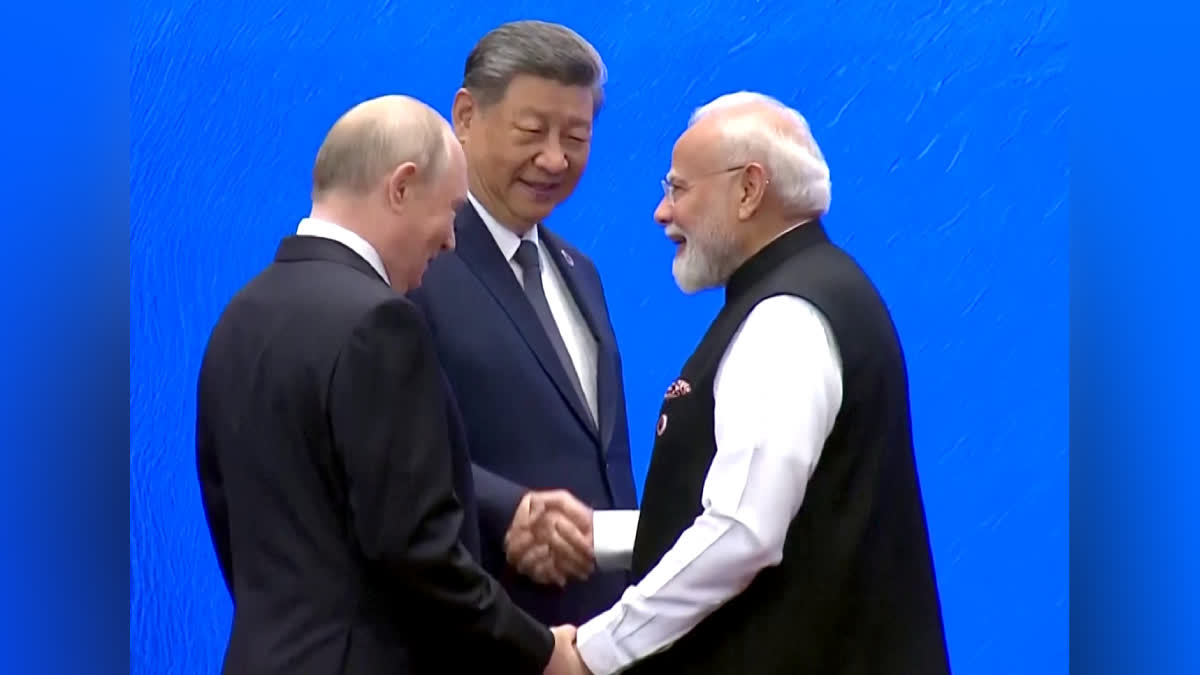
Joint handshake between the heads of state—Vladimir Putin, Xi Jinping and Narendra Modi (Russia, China and India). Available at: https://diplomacybeyond.com/sco-summit-2026/
It is also worth noting that the summit adopted a Declaration of the Council of Heads of State on Strengthening Multilateral Partnership for Nuclear and Physical Nuclear Security. The participants condemned attacks or threats of attacks against peaceful nuclear facilities and reaffirmed countries’ right to develop civilian nuclear energy. This declaration took the SCO far beyond the remit of an initial ‘regional security mechanism’. The Organisation effectively declared its own position on the global nuclear architecture, a matter previously the exclusive prerogative of the UN Security Council or the IAEA. By adopting this document, the SCO thus formally affirmed its intention to act as a single, consolidated pole in a new multipolar world, openly challenging the US and Western monopoly on setting the rules of international security.
Trends shaped by the summit
An analysis of the key themes and points made at the summit reveals a number of trends. First, the Organisation is increasingly laying claim to the role of institutional pillar of a multipolar world order. In his address at the expanded ‘SCO Plus’ meeting, Chinese President Xi Jinping said that the gathering was focused on strengthening the role of the UN and building a multipolar world, and that this demonstrated the SCO’s desire to reform global governance in line with the demands of the times. He also noted that the world was currently undergoing major changes on a scale unseen for a century, while hegemonism, unilateralism and protectionism were resurging against the tide of history. At the same time, he stressed that most countries in the world rejected power politics, conflict and confrontation.
Second, there is a clear desire to balance between different centres of power. India, for example, despite its close ties with Russia and purchases of Russian oil, is seeking to maintain an equal distance from hard-line anti-Western rhetoric, instead insisting on the diplomatic resolution of conflicts and condemning double standards on terrorism. The visibly warm, albeit brief, handshake between Modi and Xi Jinping on the sidelines of the summit was also noteworthy and may be interpreted as a sign of a gradual thaw in relations between the countries ahead of the Chinese leader’s visit to the BRICS summit, which will take place in New Delhi on 12–13 September. India is thus demonstrating ‘strategic autonomy’ through New Delhi’s efforts to balance between the West and the East.
Third, for Kyrgyzstan itself, the summit was both a test and an opportunity to strengthen its international agency. For a relatively small Central Asian republic, hosting an event on this scale demonstrated domestic stability and promising capabilities. Kyrgyzstan showed that it was not merely a passive venue, but an active participant in a range of initiatives. In particular, its promotion of the idea of establishing an SCO Development Bank with an office in Bishkek clearly demonstrated the country’s financial and political ambitions. Progress was recorded in financing and building the strategic China–Kyrgyzstan–Uzbekistan railway, whose total project cost is estimated at $4.7 billion and which is intended to turn the country into a key transit hub in Central Asia.
The question of the Russia–Ukraine war
Formally, Russia’s war against Ukraine was not a key item on the summit agenda, which was primarily focused on regional security and the economy. Nevertheless, the topic inevitably arose in bilateral discussions between leaders.
Russian President Vladimir Putin held a series of bilateral meetings in Bishkek (nine in total), including with the Chinese president and the Indian prime minister. Talks with Xi Jinping covered bilateral economic relations, cooperation amid geopolitical instability and the strengthening of the strategic alliance. Kremlin spokesperson Dmitry Peskov later clarified that the two leaders touched on the war against Ukraine only briefly.
Indian Prime Minister Narendra Modi spoke at considerably greater length about the situation in Ukraine during his conversation with Putin. He said that India supported efforts to end the war in Ukraine, and that humanity needed to move from endless war towards ending it and stopping the fighting, which was very important. Indian media also reported a fuller version of Modi’s remarks, in which the prime minister stressed that every day spent at war set humanity back, while every step towards peace filled it with renewed hope, and that the whole of humanity was calling for all issues to be resolved peacefully as soon as possible.
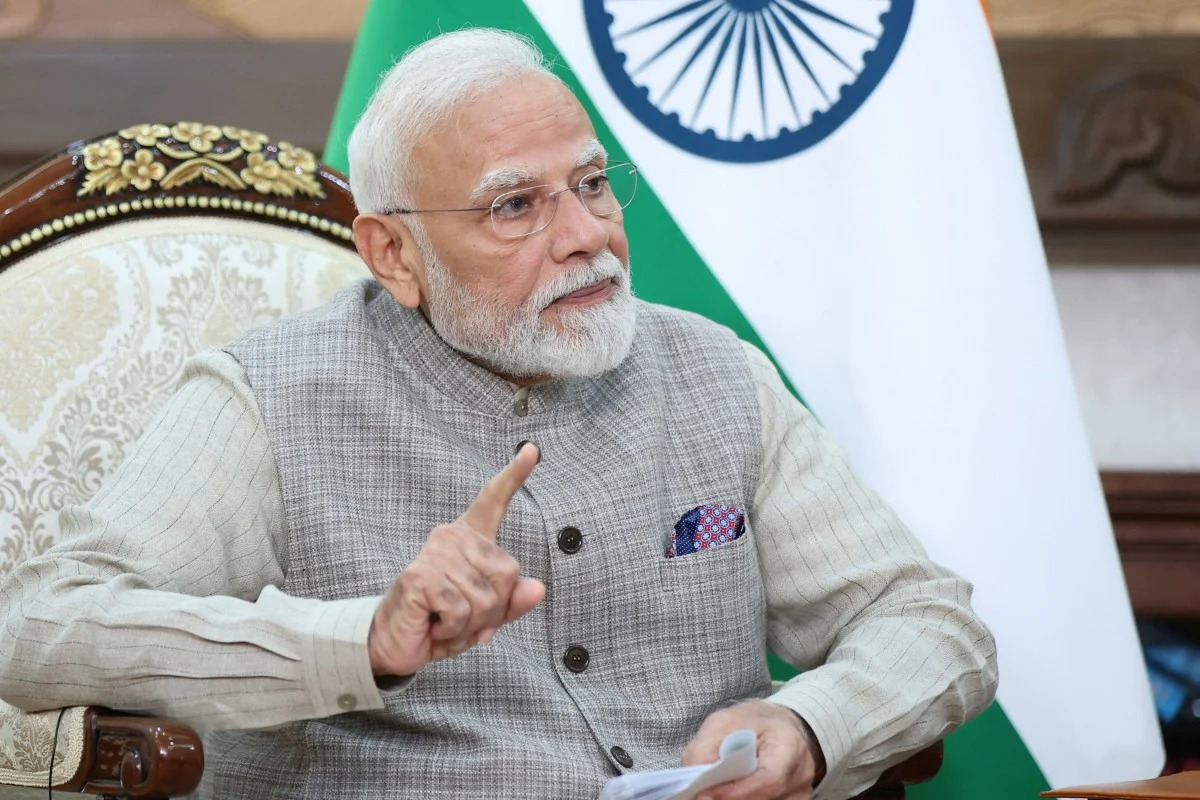
Indian Prime Minister Narendra Damodardas Modi.
Available at: https://www.indiatoday.in/india/story/terrorism-cant-be-a-strategic-asset-no-room-for-double-standards-pms-firm-message-at-sco-pak-pm-present-2984282-2026-09-01
Chinese President Xi Jinping did not make a separate, detailed statement on the Russia–Ukraine war from the SCO summit podium, focusing his public remarks instead on multipolarity and the reform of global governance. At the same time, Beijing traditionally supports the general principle that international disputes should be resolved by political and diplomatic means in accordance with the UN Charter.
At the post-summit press conference, Vladimir Putin said that Russia did not strike Ukraine’s leadership, explaining that negotiators from the Ukrainian side would be needed for a peaceful settlement. This statement came against the backdrop of his own remarks about continuing strikes on Ukrainian energy infrastructure, which he described as a response to attacks by Ukrainian forces on facilities in Russia.
Thus, the Ukraine issue at the Bishkek summit revealed a deep divide among SCO leaders in their visions of the future world order. While India called for peace and China sought to maintain a neutral image, Russia used the Organisation’s sidelines to legitimise its continued military escalation.
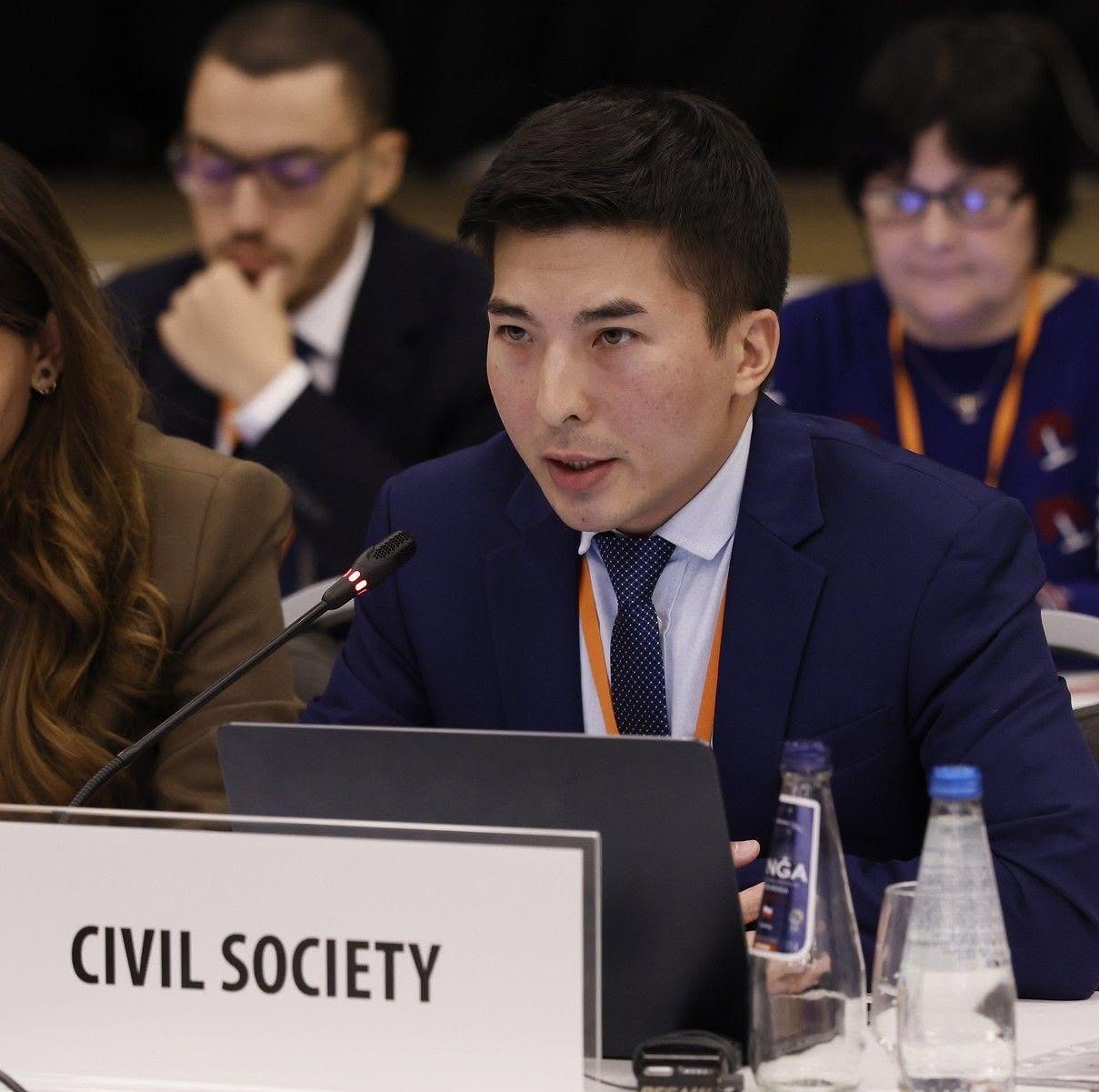 Murat Karypov, Executive Director of the ‘Bir Duino Kyrgyzstan’ Public Association and project management expert (Bishkek, Kyrgyz Republic), shared his views on the Ukraine issue and the general trends at the SCO summit exclusively with the Civil Diplomacy Foundation:
‘Speaking about the SCO summit in general and considering its outcomes through the lens of Central Asia, it is first and foremost an indication of how the region as a whole is trying to adapt to a new geopolitical reality. As for the Ukraine issue, I would not say that there was any fundamentally new shift in the position of Central Asian countries at the summit. Rather, a very cautious approach remains in place: the countries of the region are trying not to take a firm side, while maintaining working relations with Russia and China, and also with Ukraine and Western partners. At the same time, it should be noted that the war in Ukraine is increasingly seen not as a separate European conflict, but as a factor that directly affects security, transport corridors, investment and the foreign policy balance in Central Asia.
It is particularly important to look at the practical outcomes of the SCO summit in Bishkek. Central Asia is currently seeking to diversify its transport and economic ties, so the Middle Corridor, links with Türkiye and the European direction are becoming increasingly important. In this context, Ukraine could become a strategically important partner for our region, particularly on transport connectivity, food security, energy and the exchange of experience. I would therefore say that the main outcome of the SCO summit in Kyrgyzstan – is not any high-profile statements on Ukraine, but a demonstration of how quickly the landscape of international relations in Central Asia is changing and how strongly the countries of the region are seeking to preserve the greatest possible freedom in their own foreign policies.
At the opening ceremony of the 6th World Nomad Games in Bishkek on 31 August, Ukraine’s team was among the national delegations. This is genuinely important not only culturally but also politically. Ukrainian athletes walked across the stadium carrying the national flag of Ukraine. What is especially symbolic is that the Ukrainian delegation was represented by Crimean Tatars—that is, representatives of the indigenous people of Crimea—competing on behalf of Ukraine. The opening ceremony took place on the eve of the SCO countries’ meeting, attended by all the presidents.’
Conclusions
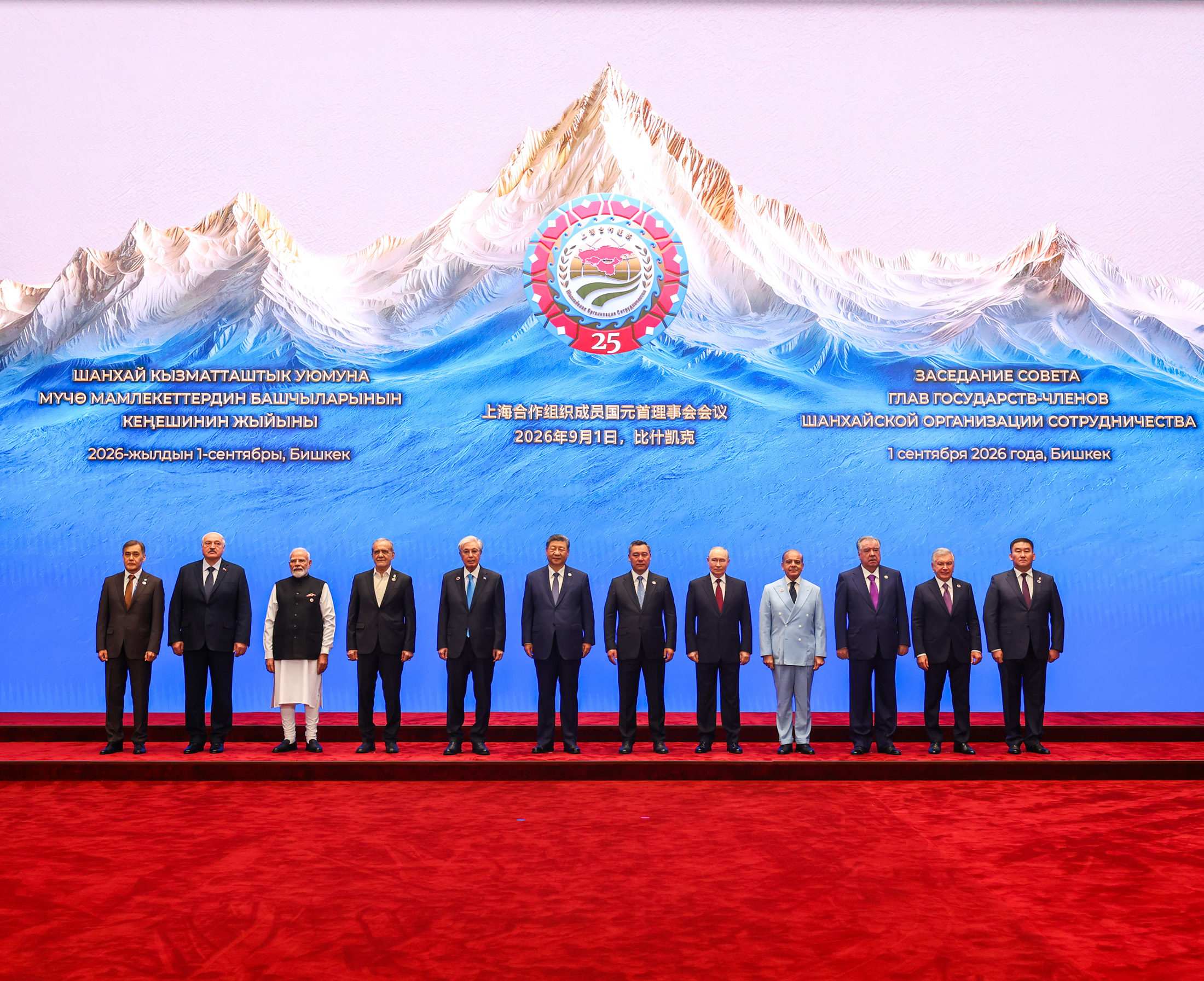
Group photo of the leaders of the Shanghai Cooperation Organisation (SCO) member states in Bishkek, Kyrgyzstan, 1 September 2026. Available at: https://en.wikipedia.org/wiki/2026_Bishkek_SCO_summit
The Bishkek SCO summit clearly demonstrated that the Organisation, which began a quarter of a century ago as the modest ‘Shanghai Five’ for settling border-related trust issues between post-Soviet countries and China, has definitively evolved into a broad geopolitical platform. Bringing together more than a quarter of the world’s population and enormous economic potential, the expanded bloc of 10 member states is increasingly openly presenting itself as an institutional pillar and an alternative to the West-centric world order. Despite some internal differences, the Organisation is showing a desire to shape the contours of a multipolar world. Against this backdrop, holding Kyrgyzstan’s Independence Day celebrations, the major World Nomad Games and the anniversary summit of leaders in Bishkek at the same time was a deeply symbolic gesture by the host country. Kyrgyzstan made the most of a moment of heightened international attention, using soft-power tools to strengthen its own agency and establish itself as a visible and ambitious player on the map of wider Eurasian politics.
At the same time, the summit’s concrete achievements were mixed. Despite the adoption of 28 documents and amendments to the Organisation’s Charter, the key initiative to establish a fully fledged SCO Development Bank was not finalised, owing to covert competition within the bloc. The Ukraine issue, meanwhile, featured largely in the background, in the form of general calls for peace, without any substantive ideas or concrete proposals. Internal differences among participants on a number of important issues are hindering the adoption of consolidated decisions on global crises. This leaves a fundamental question unanswered: to what extent can the SCO genuinely move from declaratory multipolarity and high-profile manifestos to creating real instruments for influencing today’s most acute conflicts?