A New Eurasian Architecture: How Russia and Belarus Are Seeking to Transform the Regional Security Order


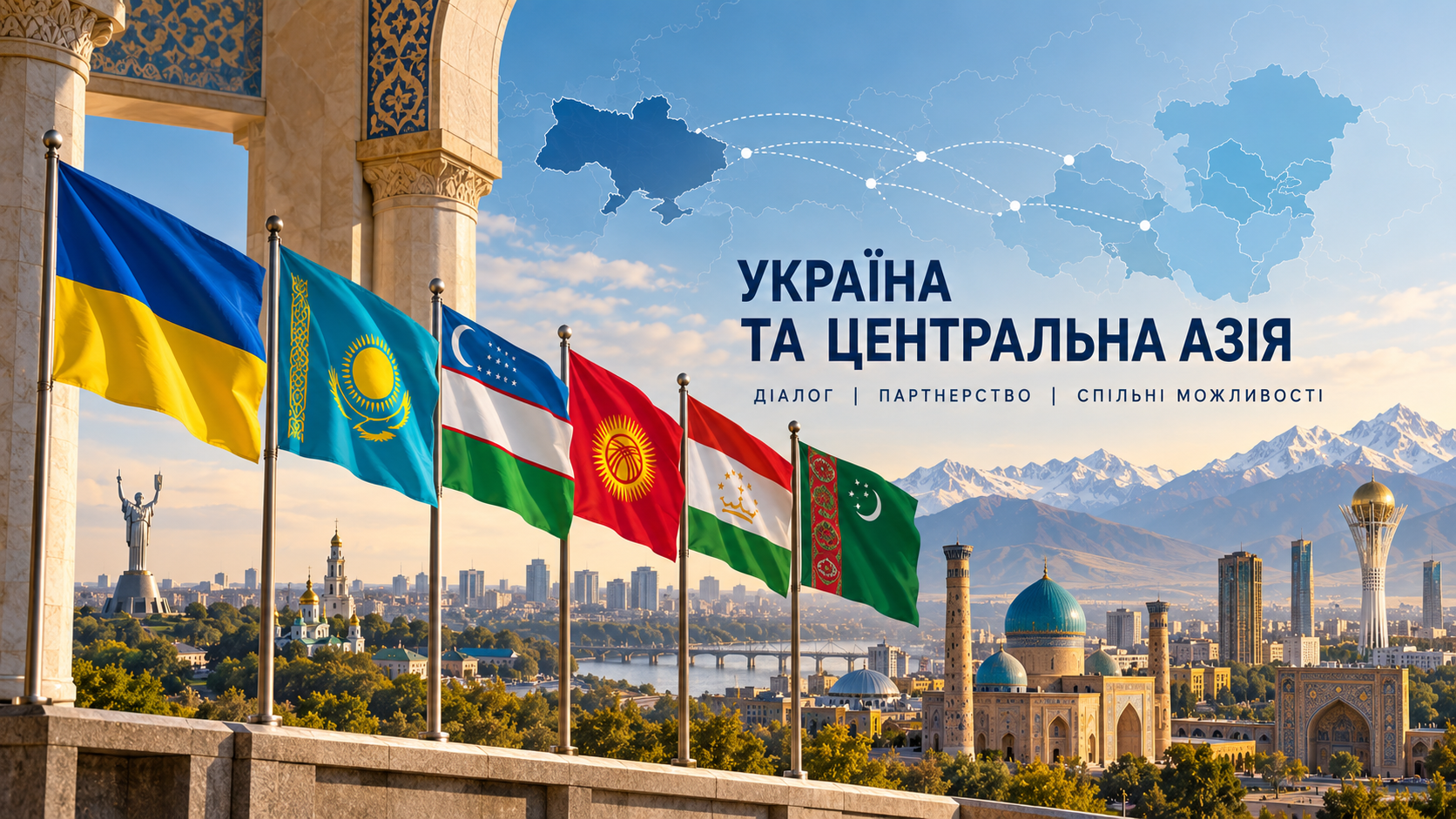
Moscow and Minsk are stepping up efforts to promote the concept of Eurasian security, seeking to turn regional integration mechanisms into instruments of long-term political influence. At the same time, Central Asian states are in no hurry to abandon their multi-vector foreign policies. What are the prospects for a new Eurasian architecture, and what does it mean for Ukraine?
Eurasian security as an instrument of geopolitical competition
Russia’s full-scale war against Ukraine has accelerated the transformation of Eurasia’s political and economic landscape. Traditional mechanisms of regional cooperation are increasingly becoming arenas of competition between different visions of the international order.
One of Moscow’s priorities remains preserving its status as a key decision-making centre in the post-Soviet space. However, this is becoming more difficult to achieve through bilateral relations alone. Central Asian countries are expanding cooperation with China, the European Union, Turkey and the Gulf states, gradually increasing their room for manoeuvre in foreign policy.
In these circumstances, Russia is seeking to shift the debate on regional security to a broader, pan-Eurasian level. This allows it to present its initiatives not as instruments for restoring influence over its neighbours, but as part of the formation of a new international order.
An important element of this policy is the process of drafting the Eurasian Charter of Diversity and Multipolarity in the 21st Century, whose official launch was announced in September 2026.
Belarus as a diplomatic platform
Belarus plays a particular role in implementing Russian initiatives.
Minsk is seeking to establish itself as a permanent diplomatic platform for discussions on Eurasian security. Hosting international conferences with representatives of various countries and regional organisations allows the Belarusian leadership to partly offset the constraints on its foreign-policy contacts caused by international isolation.
At the same time, the interests of Moscow and Minsk are not entirely identical.
For Russia, the Eurasian security architecture is primarily an instrument for revising the regional order mechanisms established after the Cold War and reducing Western influence.
For Belarus, participation in such initiatives has additional significance: it creates opportunities to maintain international contacts, demonstrate its diplomatic agency and enhance Minsk’s political value to Moscow.
Yet this is where the main contradiction in Belarusian policy arises. The closer military and political integration with Russia becomes, the less room there is for independent foreign-policy manoeuvre.
Central Asia is not ready to make a clear-cut choice
The position of Central Asian states remains the most significant constraint on Russia’s plans.
Kazakhstan, Uzbekistan, Kyrgyzstan and Tajikistan have different economic and security dependencies on Russia, but they share a desire to avoid a situation in which regional integration becomes an instrument of subordination in foreign policy.
Kazakhstan is interested in retaining the economic benefits of the Eurasian Economic Union while developing transport corridors and partnerships that reduce its dependence on Russian infrastructure.
Uzbekistan, which is not a member of the EAEU, retains greater institutional freedom in shaping its foreign economic policy. For Tashkent, attracting investment, technology and international partners without taking on additional political commitments remains a matter of principle.
Kyrgyzstan and Tajikistan are heavily dependent on the Russian labour market and economic ties with Moscow. At the same time, they too have an interest in diversifying their external relations.
Therefore, the participation of Central Asian representatives in Eurasian forums should not automatically be interpreted as support for Russia’s vision of the region’s future.
For most countries in the region, such platforms remain a way to maintain dialogue, learn about partners’ intentions and retain access to various diplomatic formats.
Economic integration and the sanctions factor
The economic dimension of Eurasia’s transformation is also significant.
International sanctions against Russia and Belarus have accelerated changes to trade routes, the composition of imports and exports, and the role of intermediary countries.
For Moscow, developing alternative transport infrastructure, payment mechanisms and trade ties with Asian countries has become a matter of economic resilience.
Belarus, for its part, is becoming increasingly dependent on the Russian market and the Russian Federation’s logistical capacity. This is deepening the asymmetry in the economic relationship between the two states.
At the same time, increased trade between Russia and other Eurasian countries does not necessarily signal closer political ties. For many countries in the region, economic engagement with Moscow remains a pragmatic choice that they seek to combine with cooperation with the West and China.
Particular attention should be paid to the risks of re-exporting dual-use goods, opaque intermediary schemes and the use of regional logistics to circumvent export restrictions. However, an increase in trade in itself is not evidence of sanctions violations: reaching such conclusions requires analysis of the specific goods, companies, routes and end recipients.
Is a new security system possible without Europe?
The main problem with the concept of pan-Eurasian security is the contradiction between its stated inclusiveness and the real political interests of its proponents.
Russia is promoting the idea of a broad continental mechanism that would bring together different regional organisations. However, without agreement on the fundamental principles of sovereignty, territorial integrity and the inadmissibility of the use of force, the creation of an effective collective security system remains unlikely.
Moreover, China, India, Turkey and the Central Asian states have their own ideas about the future regional order. Their interest in multilateral dialogue does not mean they are ready to support Moscow’s political leadership.
In the medium term, Eurasia is most likely to develop not as a single security system, but as a space with several parallel cooperation formats, among which states will seek to maintain a balance.
Implications for Ukraine
For Ukraine, the transformation of the Eurasian space creates both risks and new diplomatic opportunities.
The main risk is that Russia will seek to use multilateral regional forums to normalise its international standing, promote its preferred approaches to security and weaken its political isolation.
At the same time, the growing autonomy of Central Asian states creates opportunities to deepen Ukraine’s cooperation with the region in trade, transport, technology, education and expert diplomacy.
It is important for Ukrainian foreign policy to distinguish between states’ participation in international events and genuine support for Russian initiatives. Equating Central Asia too readily with Moscow’s position will only narrow the scope for developing bilateral relations.
The key conclusion is that Russia is seeking to institutionalise its influence in Eurasia, but is increasingly being forced to take the interests of other centres of power into account. This very contradiction will shape the future of regional integration processes and create scope for Ukraine’s diplomatic engagement.